Dr. Martin Luther King Park: The Naming of a Park
Filed under: Minneapolis Parks: General | Tags: Dr. Martin Luther King Park
 Comments (1)
 The Minneapolis neighborhoods near Dr. Martin Luther King Park have become embroiled in an argument over the name of the park and whether that name confers special meaning on park land. At issue is whether designating a portion of the park as a dog park, where dogs could be off leash, would desecrate the memory of Dr. Martin Luther King, Jr.
Here are the facts as recorded from the Proceedings of the Board of Park Commissioners, January 1st to December 31st For Year 1968:
April 17: Under the heading “Petitions and Communications.” Minneapolis NAACP requests Nicollet Field be renamed “Dr. Martin Luther King, Jr. Memorial Park.” The board referred the request to the Planning Committee.
June 19: Also under “Petitions and Communications.” The Southside Activities Council expresses unanimous support for renaming Nicollet Field, “Martin Luther King. Jr. Memorial Park.”
October 9: After amending the park board’s Policy Statement to permit parks to be named after “persons of other than local significance” when “appropriate and desirable,” the board voted to change the name of Nicollet Field to “Dr. Martin Luther King Park.”
There is no explanation for the inconsistency of the use of Dr., Jr. or Memorial in the various proposals and the final resolution. But there has been no consistency in the use of Dr. or Jr. in general usage then or now.
I was curious about the origin of the park board’s Policy Statement on the naming of parks. I did find an entry in the Proceedings for May 2, 1934 that I believe established the board’s policy.
A bit of background: The park board had nearly completed the construction of a park across the street from the new post office downtown in 1934. It was a park the park board did not want to build, but was convinced to build by the City Council. The U.S. Postal Service wanted a new post office in Minneapolis, but was reluctant to build one without a proper approach or environment. The USPS wanted a park. The City Council finally persuaded the park board to go along. The park board did so reluctantly, especially given the colossal failure of The Gateway park only a couple blocks west.
So the park board had a new park, with a grand new statue — the Pioneers Statue, which was moved for a second time last summer to B. F. Nelson Park. All the park needed was a name. Everyone had suggestions, but three names seemed to generate the most interest.
Lafayette Park. May 20, 1934 would be the centennial of Lafayette’s death and some thought the park should be named for him and dedicated on that date.
Roald Amundsen Park. This was the choice of the Norwegian community. Amundsen, a Norwegian explorer, was the first to reach the South Pole in 1912 and had died in 1928 while on a rescue mission in the Arctic.
General Pulaski Park. The Polish community proposed naming the park for Kazimierz Pulaski the Polish soldier of the Revolutionary War who was credited with creating the first American cavalry unit. An effort to rename Bottineau Field for Pulaski had failed the year before.
Perhaps not wishing to offend any nationality, the Special Committee on Nomenclature offered a new policy for the park board on May 2, 1934. The statement noted that the City Council and the Board of Education had chosen to name streets and schools to perpetuate the names of Presidents, explorers of local and international fame, and artists, writers and scientists of world-wide importance, “all of which your committee believes to be commendable.”
“However, some official body should lay particular emphasis on perpetuating legendary and place names of local significance and the names of those of our own citizens who from time to time have played important parts in the molding of our city — its physical structure, its artistic and spiritual background.
“Our parks are admirably suited for such a purpose, and such a purpose most admirably furthers the work of this Board in instilling in the minds of the youth who frequent our parks the ideals of useful citizenship…Here is something intimate — some one of us has achieved honor — our fathers knew him — we know his descendants. We too might achieve such honor by leading exemplary and highly useful lives.”
So, the committee recommended that “your honorable Board restrict the names to those commemorating men and women of local civic achievement and historical importance and legendary and place names of local significance…”
The statement was adopted and apparently still in place in 1968. At the meeting after the policy was adopted (May 16, 1934), the same committee recommended the name “Pioneers Square” for the new park that until then had been referred to simply as “Post Office Square” or the more Orwellian “Block 20.”
It was this policy that the park board had to amend in October 1968 to be able to rename Nicollet Park, Dr. Martin Luther King Park.
By the way, Nicollet Park was not named directly for the French cartographer Joseph Nicollet. It was named for the avenue named for him, which formed the park’s western border.
David C. Smith
Minneapolis Park Memory: Lake Hiawatha
Living on the south side of Minneapolis for fifty years, the park at Lake Hiawatha is part of my memories, especially because my children were able to swim and enjoy picnics. The south side of the park was the setting for several family reunions, and we used several picnic tables set on a small hill. Here the kids could toss a few balls and the young tots could run freely and, of course, some could swim. It was a beautiful place to get together. A relative from California loved to walk around Lake Hiawatha, and she was so complimentary about the park and how well it was maintained.
Rose Trachy
Minneapolis Park Memory: Sparks, shetlands and a muskrat
Filed under: Minneapolis Park Memory | Tags: Minnehaha Falls, Powderhorn Park
Leave a Comment I lived at 3040 Longfellow Avenue South until I was nine years old, and I have fond memories of Minneapolis parks and lakes. We were a walking, rail-riding family, often hurrying to Cedar Avenue to catch the streetcar. Do you remember the overhead sparks?
My dad and his younger brother Bobby, who often stayed with us, would pull me on the toboggan all the way to Powderhorn Park to slide down the “big” hill. Family legend has it that I didn’t trudge up the hill hand-in-hand like most kids: I had to be carried. My mom took me by streetcar for ice skating lessons at the Minneapolis Arena, and Dad and I would carry our skates to Powderhorn Park to practice on the lake. Do you remember when it was so cold you could hear the ice all the way across the lake?
Of course, Minnehaha Falls was a fascination for the young me. Remember the pony rides? I’m sure I thought I was Dale Evans as those Shetlands made endless circles. A family outing at the Falls always included a long walk down (and up) the stairs built by the federal work-relief crews. I have pictures of me and Dad posed at those beautiful stonework rest stops.
Other bits and pieces of my Minneapolis park and lake memories include the swans of Loring Park, the Aqua Follies at Theodore Wirth, and canoeing in a borrowed canoe on Lake of the Isles, with my fellow paddlers trying to hit a muskrat with their paddles.
Pam Schultz
McRae Park: Football Team Photos
Filed under: Minneapolis Parks: General | Tags: Football, McRae Park
Comments (14) Thanks to Ann Kegley, recreation director at McRae Park, for these photos of youth football teams from McRae. None of the players or coaches in these photos is identified. If you can identify anyone, send me a note. The team wore the jerseys of the Seaman Gilfoy VFW post. I can find little information online about that post. Did the post sponsor teams only at McRae Park or other parks, too?

McRae Park midget football team, 1963 (Minneapolis Park and Recreation Board)
I love it when people label photos. The next one is not even identified by year, but looking at hair styles, I’m guessing mid-1970s. Could the building in the background be Regina High School?

McRae Park youth football team, year unknown, but judging by hair styles probably mid-1970s. Photo may have been taken at nearby Regina High School. (Minneapolis Park and Recreation Board)
The final older football team photo we found was taken in 1979. The photo was also labelled “light cubs” apparently referring to the weight class in which the team played.
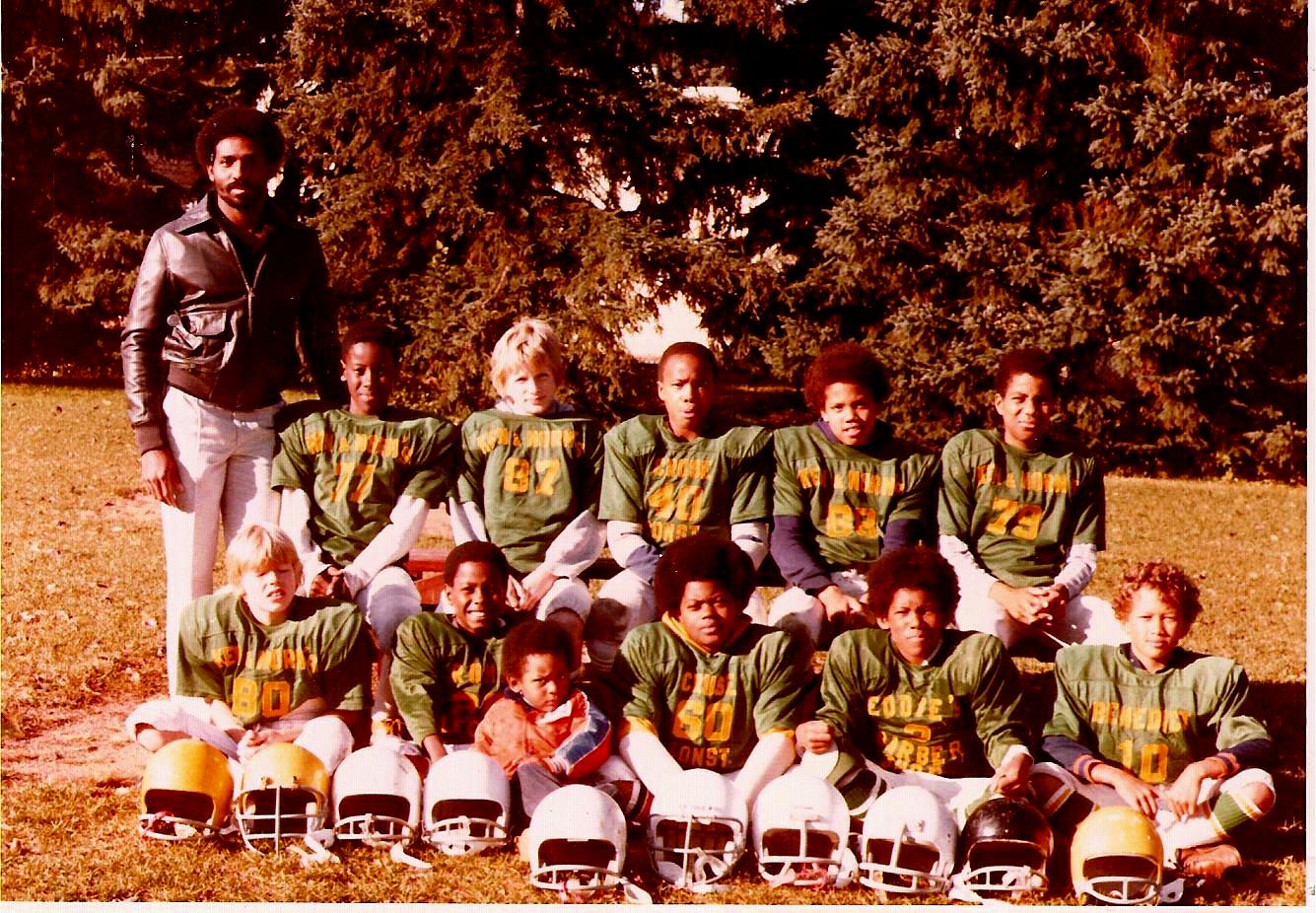
McRae Park youth football team, 1979 (Minneapolis Park and Recreation Board)
Does anyone know anything about any of the sponsors of the 1979 team: Ken and Norm’s, Cruse Construction, Eddie’s Barber Shop and Benedict?
I’d especially like to know who the coaches in these photos are. Could the coach on the left in the middle photo be Edward Solomon? Solomon was one of the better-known volunteer football coaches in the Minneapolis park system. He was a park commissioner 1996-2002. A new park southwest of Lake Nokomis was named for him in 2004.
McRae Park is unusual because it does not occupy all of the two square blocks on which it is located. The southwest corner of the park at 47th and Chicago is occupied by businesses. I have not found an explanation for why the park board didn’t acquire all of the land on those blocks — as it usually did. Ray N. Welter Heating moved to its present location on Chicago Avenue in the early 1940s not long before the land for the park was acquired in 1946. A person at the heating company told me the land that is now the park was a garbage dump when Welter moved its business to the site from Lake Street. Can anyone tell us the history of the street corner and why the park board didn’t buy all the land on that block? Some of the land for the park was purchased through condemnation; some was tax-forfeited land that the state owned and gave to the city.
David C. Smith
Florence Barton Loring
Filed under: Minneapolis Park Hero, Minneapolis Parks: General | Tags: Charles M. Loring, Florence Barton Loring, Loring Park, Minneapolis parks
Comments (8) Charles Loring was married to Emily Crossman for 38 years, to Florence Barton for only 27, but he probably knew Florence longer than he knew Emily.
The “Father of Minneapolis Parks” likely met Florence more than 30 years before he married her, but he may not have noticed her much at first. She was the daughter of his friend and business associate Asa Barton. Barton, like Loring, was an immigrant from Maine. (Barton also has his name on the Minneapolis map: Barton Avenue in Prospect Park.) Read more »
Minneapolis Park Music: Loring Park, Horace Cleveland, by Gregory Reese
Filed under: Loring Park | Tags: H.W.S. Cleveland, Horace Cleveland, Loring Park
Leave a Comment This is the only music I know of based on a Minneapolis park and the landscape architect who designed it. Gregory Reese composed “Loring Park, Horace Cleveland” for McNally Smith College of Music Art-inspired Music Project. Very cool. Have a listen while you stroll through the park. Or find a favorite bench.
Know of other music based on Minneapolis parks? A playground or two must have shown up in some rock or rap lyrics, no? I recall a reference to Holmes playground in a song, but can’t remember the group.
David C. Smith
The Case For Horace Cleveland’s Name on a River Gorge Park
Filed under: Landscape Architects, Minneapolis Park Names, Minneapolis Parks: General | Tags: H. W. S. Cleveland, Horace Cleveland, Minneapolis parks, Mississippi River
Comments (8) “A continuous park…of such picturesque character as no art could create and no other city can possess.”
That is how Horace Cleveland described the park he imagined along the boulevard he recommended for the west bank of the Mississippi River in Minneapolis. He went on to write in his Suggestions for a System of Parks and Parkways for the City of Minneapolis, which he presented to the first Minneapolis park board on June 2, 1883:
“The Mississippi River is not only the grand natural feature which gives character to your city and constitutes the main spring of prosperity, but it is the object of vital interest and center of attraction to intelligent visitors from every quarter of the globe, who associate such ideas of grandeur with its name as no human creation can excite. It is due therefore, to the sentiments of the civilized world, and equally in recognition of your own sense of the blessings it confers upon you, that it should be placed in a setting worthy of so priceless a jewel.”
Horace Cleveland had a special passion for the Mississippi River gorge. The banks of the river remain a beautiful and wild place thanks, in part, to his constant encouragement over nearly three decades for Minneapolis (St. Paul, too) to acquire the river banks downstream from St Anthony Falls to preserve them from ruin.
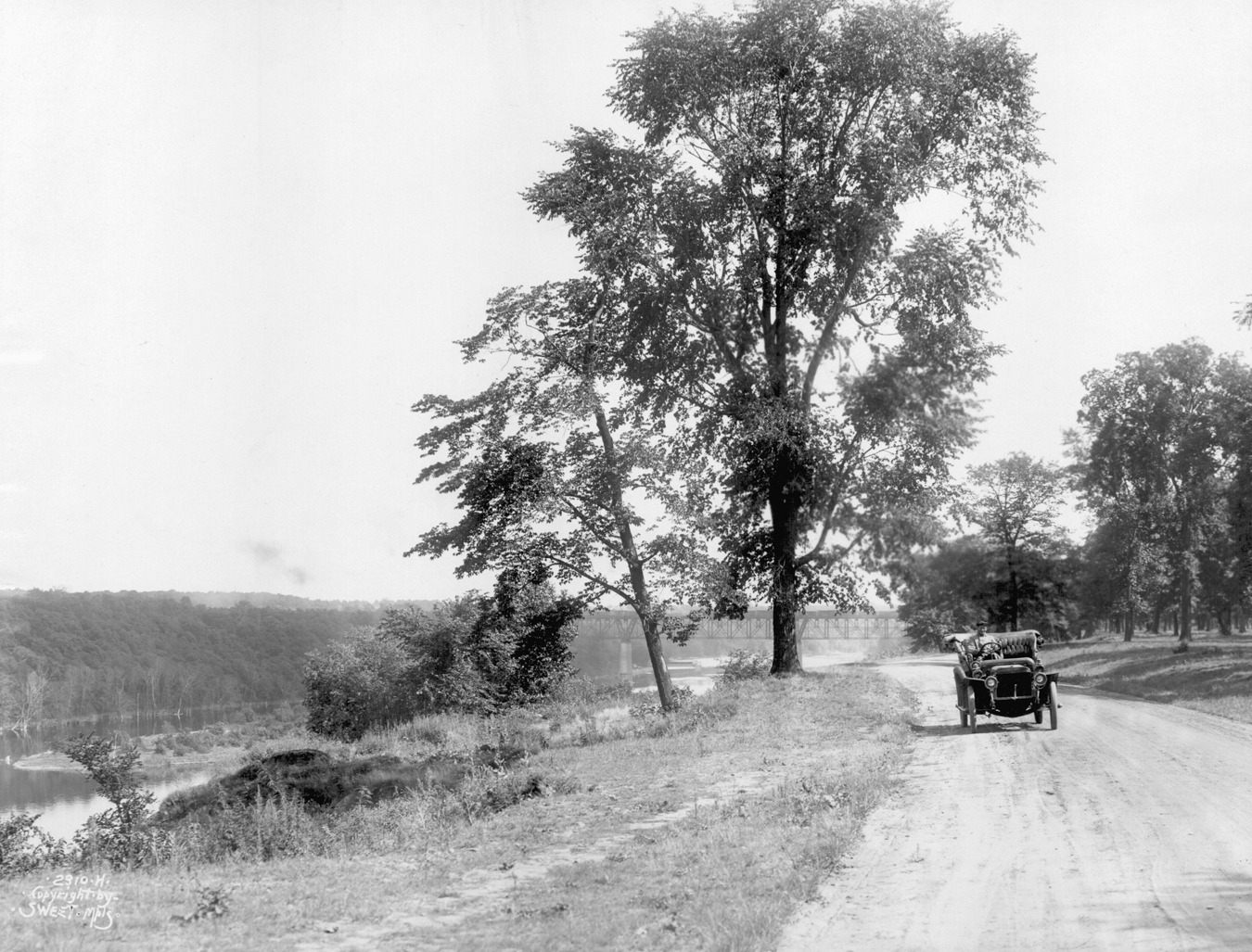
This photo of West River Parkway in about 1910 shows how wild the river banks were. The ruggged, wild banks of the river gorge, the only such place on the entire length of the Mississippi River, remain as beautiful today as during Horace Cleveland’s lifetime. (Hennepin County Public Library, Minneapolis Collection, M0129)
The park board finally acquired all the land along the west side of the gorge downriver from Riverside Park to Minnehaha Creek in 1902, more than a year after Cleveland’s death. Cleveland once said that he would feel that he “had not lived in vain” if the city would preserve the river bank in its natural state.
Cleveland wrote of the river banks:
“No artist who has any appreciation of natural beauty would presume to do more than touch with reverent hands the features whose charms suggest their own development. No plan for such work could be made.”
Cleveland not only appreciated the beauty of the river, but he foresaw that the cities of St. Paul and Minneapolis would one day grow together. In his mind that probability made it even more important that the cities preserve some wild, natural places along the river that ran between them.
We should name a river gorge park for Cleveland just as a tribute to his descriptive powers, even if he hadn’t suggested, recommended, planned, cajoled, informed and educated a generation or two of the city’s leaders on land preservation and city building.
I believe the only name ever given to the land along the river was Mississippi Park. A bit plain. Winchell Trail and West River Parkway run through it, and those names can remain. It would cause no one any discomfort to officially name the rest of the west gorge for Cleveland. It’s not like renaming a street, which causes people to have to change their addresses and the city to put up new road signs. It’s just putting a name on a space that essentially has none now.
A marker or two along Winchell Trail and the parkway would suffice to let people know Horace Cleveland’s name. That couldn’t cost much. I’ll put up the first hundred bucks.
Horace Cleveland River Gorge Park. He’s why we have it, so let’s put his name on it. I think we owe him that.
David C. Smith
© David C. Smith
William Watts Folwell: Show them in their best days
Filed under: Minneapolis Parks: General | Tags: William Watts Folwell
Leave a Comment William Watts Folwell was an accomplished man: Union Army engineer, first president of the University of Minnesota, Minneapolis park commissioner for 18 years, author of a four-volume history of Minnesota. The list goes on and on. Not least, he is one of my heroes.
Many photographs of Folwell exist, including some posted on this site, but today I will follow Folwell’s advice. In 1911, when Folwell was 78, he wrote to Minnesota Historical Society President Warren Upham:
“Let me make a suggestion in regard to portraits of men in all your publications. Don’t print “old man pictures,” but show the men as they were in their best days if possible. The likeness of General Sibley in General Baker’s book is atrocious. Sibley was a splendid figure in his prime, and ought so to be remembered.”
(Wiliam Watts Folwell: Autobiography and Letters of a Pioneer of Culture, Ed. Solon J. Buck. Minneapolis: University of Minnesota Press, 1933)
So here is William Watts Folwell dressed for his wedding to Sarah Heywood when he was 30 in 1863. At the time he was an enlisted engineer in the Union Army. While it appears from his shoulder patch here that he was a captain at the time, he attained the rank of lieutenant colonel, the highest possible for an enlisted man, and commanded an engineering company of 450 men in several important Civil War battles. Folwell was hired as the first president of the University of Minnesota six years after he was married.
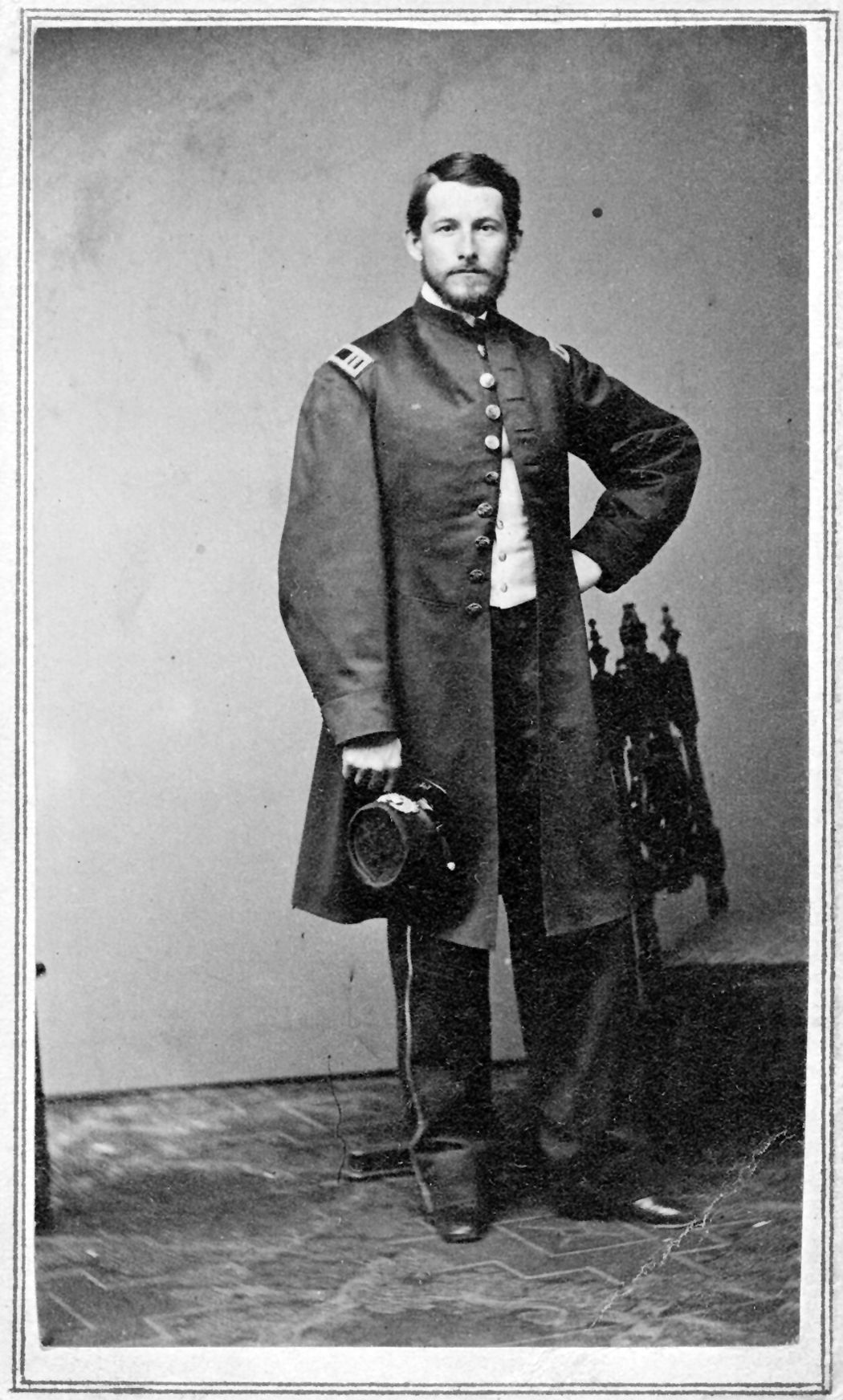
William Watts Folwell photographed in his Union Army uniform for his wedding in 1863 to Sarah Heywood. (Powelson, Minnesota Historical Society)
David C. Smith
Horace Cleveland River Gorge Park: We need the man’s name on our map
Filed under: Landscape Architects, Minneapolis Park Names, Minneapolis Parks: General | Tags: H.W.S. Cleveland, Horace Cleveland
Comments (4) Folwell Junior High School is no longer, but we still have Folwell Park in north Minneapolis and Folwell Hall at the University of Minnesota. The building at the university won’t last forever, but the park should, so people will have reason to remember William Watts Folwell even if they never see scribblings such as this or City of Parks. Many other heroes of our park development are remembered in park names, too: Loring, Berry, Morrison, King, Beard, Wirth, Gross, Bossen, Armatage.
Not so for Horace William Shaler Cleveland who played such an important role in the creation of the Minneapolis park system. His name is nowhere in this city. While I’m quoting Folwell today, there’s this from the close of his President’s Address in the 1895 annual report of the Minneapois Board of Park Commissioners:
“Although still in the land of the living, no further service can be expected of Mr. H. W. S. Cleveland, disabled as he is by the infirmities incident to his advanced age. Our city may count itself fortunate to have had his assistance in the original development of plark plans, and in the later execution of them in part. In some proper way his name should be perpetuated in connection with our park system.”
That is as true today as it was 115 years ago. We need Horace Cleveland’s name on Minneapolis maps.
My recommendation: everything between West River Parkway and the Mississippi River, from the mouth of Minnehaha Creek to Riverside Park, should become “Horace Cleveland River Gorge Park.” He loved most of all the river gorge and never stopped fighting for its acquisition as parkland, something that wasn’t accomplished until after his death. The west river bank is really known only as that; it doesn’t have a real name anyway. So why not put Cleveland’s name on it? No one has to call it that, I don’t care, just print it on the map so people don’t forget. It seems a little thing to do for a man who did so much for you and me.
I’m looking at you, park commissioners.

Horace Cleveland proposed this system of parks and parkways in 1883. I think it merits his name on a bit of the park system he suggested. (Minneapolis Park and Recreation Board)
David C. Smith
Sibley Field
Filed under: Minneapolis Parks: General | Tags: Minneapolis parks, Sibley Field
Comments (23) One of the most heavily used playgrounds in Minneapolis for a few decades was Sibley Field at 39th and Longfellow in south Minneapolis. Now, thanks to the efforts of Annie Olson who worked at Sibley Field for several years, we have found some historic photos of activities at Sibley Field.
One of my favorites is this hockey team wearing Cloggy’s sweaters.
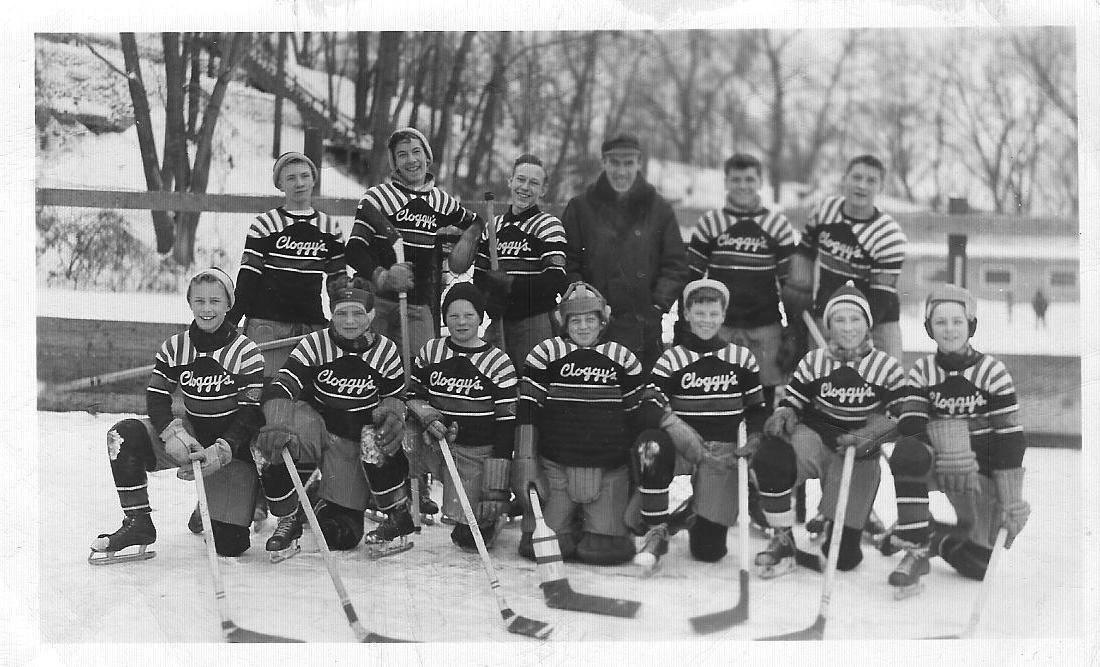
Cloggy’s 1952 hockey team at Sibley Field (Minneapolis Park and Recreation Board). ** Please see the comments by Ron Jelmo below on this photo.
In more recent times, Cloggy’s was a bar at 34th and 54th, but that’s quite a distance from Sibley Field. Not exactly a neighborhood bar. The photo provides no identification of the players or coaches. Does anyone know the story of this Cloggy’s team or Cloggy’s sponsorship of teams in general?

Sibley Field cub hockey team, 1961 (Minneapolis Park and Recreation Board)
Another group of unidentified players is this 1961 cub hockey team? Anybody know any of these kids?
Another picture that I found interesting is this one of unnamed staff or volunteers at Sibley Field. The year is also unknown, although I’m guessing early 1960s.

Sibley Park staff or volunteers, year unknown. (Minneapolis Park and Recreation Board)
I like this photo because of the “BPC” on the t-shirts. BPC was the acronym for Board of Park Commissioners, the official name of the Minneapolis park board until it was changed in 1969 to Minneapolis Park and Recreation Board. The new name was intended to emphasize the significant responsibilities of the park board for recreation programs — something that didn’t exist when the BPC was created in 1883. I presume they are standing in front of the recreation center that was built in 1924 and stood until the current rec center was built in 1971. Can anyone identify the people in this picture and whether they were BPC employees or Sibley Field volunteers? Interesting composition in front of the men’s room.
Sibley Field was one of the most active parks in Minneapolis from 1946 when it was one of only five city parks that offered year-round programming. The other four year-round parks were Folwell, Nicollet (King), Logan and Loring; North Commons was added to that group in 1956.

Women’s craft class at Sibley Park in 1961. (Minneapolis Park and Recreation Board)
This series of photos (stapled together) suggests the wide range of activities offered — and groups served — at the park. Two years after this photo was taken Sibley Field became one of nine recreation centers in Minneapolis to offer programs for senior citizens, too. The seniors met one morning a week at the park. The program was modeled after a similar program that had first been tried at Loring Park in 1960.
A search of old Minneapolis Morning Tribunes reveals that the Cedar Avenue Heights neighborhood (the park was originally Cedar Avenue Heights Field) began to be developed in 1909-1910. Newspapers also reveal that petitions for a park in Cedar Avenue Heights, which the park board received in September, 1921, followed the creation of a neighborhood improvement association in March of that year (Minneapolis Morning Tribune, March 28, 1921). The Tribune reported that the neighborhood improvement association was founded primarily to promote the creation of a double track on the street car line on Cedar Avenue from Lake Street to 42nd Street and an extension of the line south of 42nd. (Park commissioners also appeared at the City Council to advocate extending the Cedar Avenue car line to serve the new bath house at Lake Nokomis.) The paper also speculated that day that the association would also support the construction of a new Nokomis High School, which was eventually named Roosevelt High School.
The impetus for the formation of the Cedar Heights Improvement Association in March, 1921 was almost certainly the opening of the new Miles Standish school in January of that year. The school quickly became the center of the community. The Tribune reported that 900 people attended the first meeting of the neighborhood improvement association at the school.
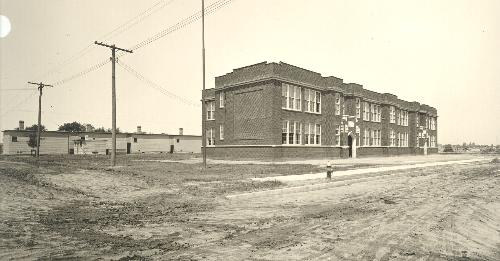
The new Miles Standish School facing what is now Standish Avenue at 40th Street in 1922. The school was significantly enlarged in 1923, just two years after it was built. (Minneapolis Public Schools)
Cedar Avenue Heights Field was not the first playing field in the neighborhood. Tribune articles about amateur baseball in 1909 refer to a baseball field — the home field of the Prince Realty team — at Cedar and 42nd Street. I’ve never seen a picture of that field. If you have, let me know where I can find one.
David C. Smith
Minneapolis Park Memory: Meetings with Grandpa
Filed under: Minneapolis Park Memory | Tags: Francis A. Gross, Minnehaha Park, Theodore Wirth, William Lohff
Leave a Comment I feel so fortunate having our parks in Minneapolis. My late husband, Bob, used to tell how his mother saved her coins until she could buy a toboggan for the family to use in Minnehaha Park. I have used the tennis courts at Nokomis.
My family has a personal interest in the park system, as my grandfather, William Lohff, was on the park board with Francis Gross and others. I remember Theodore Wirth and Gross meeting with Grandpa at his home in south Minneapolis. They had a hard time convincing people that the parks and lakes should be for all the people and not allow park land to be sold. We have all benefitted from those decisions.
Mary Thompson
Minneapolis Park Memory: The Park In My Back Yard
It’s the smell of wet wool socks against a hot stove that I remember. Skating at Pearl Park in the late 1950s. I grew up two blocks from Pearl Park — a lovely open space that the Park Board created out of a swamp. My dad, bless his heart, created a skating rink in our back yard, going out (in his business suit before heading off to work in the morning at General Mills) with a hose to flood the little rink banked with snow. But our little ice sheet was tiny — the rink at Pearl was big, and full of lively skaters from all over the neighborhood. Flood lights lit the place up in the dark of winter nights, and seeing sparks of snow drift through those lights while we skated around (and fell, whump, hard on the ice, jittering bones) was heavenly. And then, when you were cold to the core, ankles turned to clammy oatmeal, you clumped up the blade-scored stairs into the wooden warming house, a dark cave-like enclosure where the community center now stands on the south end of the park. And it was warm and it was close and I remember it as dark and kids were laughing and maybe there was a little counter where you could get candy bars and hot chocolate, but the real center of the place was the stove, with a railing of metal pipes around it so you didn’t get too close and burn your feet. Off came the skates — dark brown leather, yellow laces about a mile long, we got them at the skate exchange at Nicollet Hardware, run by a neighbor, Mr. Larson.
And when the skates came off — always a tough pull, because by that time everything was wet and sticky — you’d put your wet-sock feet up against the railing and I swear you could see the steam rise off the ice blocks formerly known as feet. I remember the smell of heat — don’t recall if the stove was wood- or coal-burning or something else — but the scent was warm and enveloping and as comforting as a mom-made hotdish.
Pearl, as any park, was a neighborhood center. In summer we’d go down there and play whiffle ball in the tennis courts, trying to whack homeruns over the fence as we imagined ourselves batting cleanup for the Twins. In those days in South Minneapolis, mothers weren’t concerned about their kids roaming in the evening several blocks from home, to go to the park, to pick up a friend at his house, to wander around and see what was up. Park Board baseball teams crowded the diamonds. I remember being sent in as a pinch hitter for my older brother’s team when one of their players had to go home early. I was three years younger than all the other players, skinny and weak. My brother said “Just go up there in a crouch, you’re short and the guy will walk you.” I did that — and the pitcher fired a ball so fast I never saw it but I felt it burn across the tops of both thighs. I got my base, and my baseball career started and ended right there. Fastballs — who knew? I played Park Board football at Pearl one year — something my wife can’t believe, as I’m so not a football type. But we had a wonderful coach nicknamed “Sparky” who was inspirational. He was a vitamin salesman and had a trunk full of Flintstone vitamins — we were doping before it was cool. Also in his trunk were little gilded dog bones that said “Hero” on them, some sort of sales reward, I’d guess, and he would hand those out after the game to almost everyone. I earned one by putting my arm out to try to block a kid twice my size in one game, also earning a greenstick fracture of my arm. And my football career was over. Back to whiffle ball.
Pearl Park also claimed the spleen of a friend of mine. We were sliding down the hill from Hampshire Drive toward the tennis courts one winter afternoon, our sleds whipping over the snow. And my friend Jay met an immovable pole at the bottom of the hill, smashing his body and requiring an operation. No Olympic luge in his, or our, futures.
But those skating nights, hundreds of them, were part of my growing up. I can hear the “slish slish” of skateblades still, as I type this in Florida, where I now live, seeing from afar yet another December snowfall drop on Minneapolis.
By the late 1960s I had pretty much left skating behind as I headed into high school. But the Minneapolis park system was part of my life, every day. We lived a couple of blocks off of Minnehaha Creek, and most of my friends’ houses were located up or down Minnehaha Parkway from my house. The bike paths along the creek were my highway. And Lake Harriet was where friends and I would get away from family and school, walking around the lake, sitting in trees, mooning about, a peaceful place to let the tempests of the Sixties and of crazy high-school years pass over. The parkway and the lakes were Minneapolis to me — my back yard, my retreat. For my first marriage, my wife and I had our invitation photo taken as we stood on stepping stones in the Creek by the Parkway at 50th Street.
The wisdom of the people — their stories told so well in Dave Smith’s book — who saw into the future and set aside park land for everyone to enjoy, and truly live in, is amazing. And the current stewards of the parks are just as dedicated and doing something just as crucial to life in Minneapolis as they try, with scant resources, to maintain and expand our parks to serve more future generations.
I don’t miss the snow as I see it on television from Florida, where we just moved months ago. But I cherish the memories of Pearl Park and all the Minneapolis parks — they are part of what formed my views of environmentalism and urban design and just being alive and open to the world.
Bruce Benidt, Port Richey, Florida
Editor: Thanks, Bruce. Distant, but still here — and forever eloquent.
 Minneapolis Park History