Archive for March, 2017|Monthly archive page
Behind the Scenes: Minneapolis’s First Park?
Filed under: Minneapolis parks | Tags: H.W.S. Cleveland, Horace Cleveland, Lakewood Cemetery
 Comments (3)
 You have a rare opportunity in April to tour the greenhouses in one of the first parks in Minneapolis: Lakewood Cemetery.
Technically, the first park in Minneapolis was Murphy Square, which Capt. Edward Murphy donated to the city as a park in 1857, but Murphy Square was used as a pasture for nearly two decades.
Lakewood Cemetery was created in 1871 — 12 years before the Minneapolis Board of Park Commissioners was created — by many of the same people who helped create the Minneapolis park system. Names such as Loring, Brackett, Morrison and King are as much a part of cemetery history as they are of park history. Lakewood Cemetery even donated some of the land that is now the Thomas Sadler Roberts Bird sanctuary on the north shore of Lake Harriet to the park board. Once when the park board was short of cash, it borrowed money from the cemetery.
H.W.S. Cleveland and Lakewood Cemetery
Another name that links Lakewood Cemetery with Minneapolis parks is Cleveland — but not in the way that many assume. Horace William Shaler Cleveland, whose blueprint guided the development of Minneapolis and St. Paul parks, did not design Lakewood Cemetery, although he designed many cemeteries across the country. In 1884, the cemetery’s trustees hired Ralph Cleveland, Horace Cleveland’s son, as superintendent. The fact that Ralph had no prior experience in such a position and the trustees consisted largely of men who had worked closely with Horace Cleveland in creating the Minneapolis park system suggests that Ralph’s hire may have been a favor to the father. That became a larger issue in the future of Minneapolis parks in 1886 when Horace and Maryann Cleveland moved from Chicago to Minneapolis, in part to be nearer Ralph and his family.
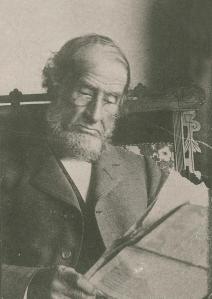
H. W. S. Cleveland
They had good reasons. Horace was 72 at that time and looking to the day when he could no longer perform the often strenuous physical duties of a landscape architect. He was also raising his two young granddaughters, whose father, Horace’s oldest son, Henry, had died of disease in the jungles of Colombia in 1880. And he couldn’t count on help from his wife, Maryann, who was frail and ill much of her adult life. Living near their only surviving child made sense.
I don’t think the St. Paul and Minneapolis park systems would be what they are today if Horace Cleveland had not moved to Minneapolis when he did. He became a strong presence in park debates. The opinions of Professor Cleveland, as he was called, were often quoted in the newspapers, which would have been far less likely if he had remained at the distance of Chicago. Would Minneapolis have acquired Minnehaha Falls without Cleveland’s prodding? Would St. Paul and Minneapolis have acquired the Mississippi River Gorge on both sides of the river without his constant encouragement and dire warnings? Would park commissioners have continued to heed Cleveland’s advice to forego improvements and decorations in the parks in order to buy more land if Cleveland hadn’t been looking over their shoulders? I suspect the answer to one or all of those questions is “No!”
I think a case could be made that Lakewood Cemetery, by hiring Ralph Cleveland as superintendent in 1884, is indirectly responsible for much of the success of the park systems in St. Paul and Minneapolis.
You’re Invited!
From its inception, Lakewood followed the national trend of creating “garden” cemeteries that were designed to be picturesque parks as well as cemeteries. An integral part of the operations of those cemeteries was growing their own flowers and decorative plants in greenhouses. The flowers were planted to beautify the cemetery grounds and were sold for placement on graves.
Lakewood Cemetery retains one of the largest cemetery greenhouse operations in the country raising 95,000 plants annually in two greenhouses. And it is inviting you to take a closer look and learn more about this colorful part of its history at a time when its greenhouses will be at their showiest!
Lakewood Cemetery will conduct tours of its two greenhouses on Earth Day, April 22 from 10 a.m. to 1 p.m. There is much more information at lakewoodcemetery.com. You’ll even get to pot a plant to take home!
I encourage you to check out the website, but don’t wait too long. The tours have a limited capacity, so reservations are required. The tour is open to all ages and it’s free, with an optional donation of $5 suggested.
Whether you’re a gardener or a history buff, it sounds like a great opportunity to see something that’s usually out of sight. Spend a couple hours in the morning helping clean up your favorite park — or join the Minneapolis Parks Foundation or Friends of the Mississippi River in their cleanup efforts — and then dash over to Lakewood Cemetery.
While you’re there, pay your respects at the graves of Horace, Maryann and Ralph Cleveland.
David C. Smith
© 2017 David C. Smith
Naming Rights … and Wrongs? People Commemorated in Minneapolis Parks
Filed under: Minneapolis Parks: General | Tags: Minneapolis Park Names
Comments (6) Given recent discussions of the propriety of the names of park properties, especially Lake Calhoun, I compiled a list of the 131 people whose names are commemorated in Minneapolis parks. This includes park properties and facilities, such as playing fields, fountains and gardens. Only one of the names is fake.
At the end of the list are several little-known facts about Minneapolis park names. Some of the names most difficult to track down belong to park triangles at street intersections. In many of those cases, the triangles were given the street name, such as Orlin and Clarence triangles. I have not researched the origin of those names, so if you know something, please share.
Also let me know if I have overlooked any names in this list. More information on many of these people is featured in other posts on this site, so if you want to learn more, begin with a quick search here.
Adams, Abraham
Alcott, Louisa May
Anthony, Saint of Padua
Armatage, Maude
Audubon, John James
Barnes, William A.
Barton, Asa Bowers
Bassett, Joel Bean
Beard, Henry Beach
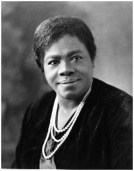
Mary McLeod Bethune
Beltrami, Giacomo
Berry, William Morse
Bethune, Mary McLeod
Bohanon, John C.
Bossen, Christian A.
Bottineau, Pierre
Brackett, George Augustus
Bryant, William Cullen
Butler, Eloise
Calhoun, Vice Pres. John C.
Carew, Rod (baseball field, Xcel Field Park)
Casey, Bob (baseball field, Stewart Park)
Cavell, Edith
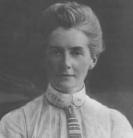
Edith Cavell
Chergosky, Donald and Janice
Chowen, George
Chute, Richard (and Samuel)
Clarence (unknown, street name)
Cleveland, Pres. Grover
Clifton (unknown, street name)
Corcoran, William Wilson
Cowles, John Jr. and Sage (conservatory, Sculpture Garden)
Coyle, Brian
Crone, Martha (shelter, Eloise Butler Wildflower Garden))
Currie, Edward A.
Cyson, Stan (baseball field, Northeast Park)
Dean, Joseph (and sons)
Deming, Portius
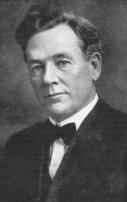
Portius C. Deming
Dickman, Ralph
Dorr, Caleb
Elliot, Dr. Jacob S.
Elwell, James T.
Farwell (unknown, developer)
Folwell, William Watts
Fremont, Gen. John Charles
Fuller, Margaret
Gale, Samuel
Gladstone, William
Gluek, Jacob
Godfrey, Ard
Gross, Francis A.
Hall, Elizabeth
Harrison, Pres. William Henry
Hartman, Sid (baseball field, Northeast Park)
Heffelfinger, Frank (fountain, Lyndale Park)
Hennepin, Father Louis
Holmes, Oliver Wendell
Hull, Agnes “Brownie” McNair
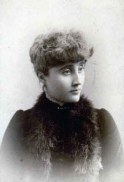
Agnes “Brownie” McNair Hull
Humboldt, Friedrich von
Imme, Roger
Irving, Washington
Isle, Billy, Ezekiel and Otis
Jackson, Pres. Andrew
Jordan, Charles M.
Kenny, Sister Elizabeth
Killebrew, Harmon (baseball field, Pearl Park)
King, Rev. Lyndon (“Lyndale” is derived from Lyndon, father of William S. King)
King, Rev. Dr. Martin Luther, Jr.
King, William Smith
Kroening, Carl
Leavenworth, Harriet Lovejoy
Levin, Joanne R.
Logan, Gen. John
Longfellow, Henry Wadsworth
Loring, Charles Morgridge

Charles M. Loring
Lovell, C. P.
Lowry, Thomas
Lupient, Jim (water park)
Luxton, George E.
Marcy, William A.
Marshall, Gov. William
Matthews, Charles E.
McRae, Alexander A.
Merrill, Mary
Monroe, Pres. James
Morris, Lucy Wilder
Morrison, Clinton
Morrison, Dorilus
Mueller, Robert C. and Herbert L.
Murphy, Edward
Neiman, Leonard
Nelson, Benjamin Franklin
Newton, Isaac
Nicollet, Joseph
Oliver, Deacon
Olson, Orvin “Ole”
Orlin (unknown, street name)
Painter, Jonathan E.
Peavey, Frank H.
Perkins (unknown, property owner)
Pershing, Gen. John
Phelps, Edmund J.
Phillips, Eddie (football field, Farview Park)
Phillips, Wendell
Pillsbury, Phillip W. (and John S. and Charles A.)
Quilici, Frank (baseball field, Shingle Creek Park)
Reed, Lachlan and Martha Sweatt
Rice, James I.
Ridgway, James Arthur
Rivers, J. D. (garden, Wirth Park)
Roberts, Thomas Sadler
Rollins (John or Mortimer?, developer of Rollins Addition)
Russell, Roswell P.
Sheridan, Gen. Phillip H.
Sibley, Gen. Henry Hastings
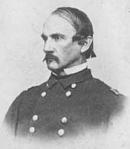
Gen. Henry Sibley
Smith, Charles Axel (C.A.)
Snelling, Col. Josiah
Solomon, Edward C.
Steele, Franklin
Stevens, Col. John
Stewart, Levi Merrick “Elder”
Stinson, James
Sumner, Sen. Charles
Sweatt, Harold
Todd, George
Van Cleve, Gen. Horatio P. and Charlotte Ouisconsin
Waite, Edward Foote
Washburn, Sen. William Drew
Washington, Pres. George
Webber, Charles C. and Mary Harris
Wells, Frederick (tennis center)
Whittier, John Greenleaf
Willard, Frances
Winchell, Newton (and Horace)
Windom, Sen. William
Wirth, Theodore
Young, Annie
Some “names” are not included on this list. Minnehaha is often thought of as a fictional character from Longfellow’s famous poem “Song of Hiawatha.” In fact, it’s a phrase in the Dakota language, “mni haha” that was a generic term for “waterfall.” So Longfellow named his character not for laughing water, but literally for waterfall.
Six other names from Longfellow’s once wildly popular poem also were used in the Minneapolis park system. Four are still used: Hiawatha and Nokomis for lakes, Keewaydin for a park and Wenonah for a triangle. Two others, Iagoo and Osseo, were names of park triangles that no longer exist.
One of the most influential park commissioners on nomenclature opposed the Longfellow-associated names for the two lakes. William Watts Folwell, the first President of University of Minnesota and a historian, opposed naming Lake Amelia and Rice Lake for Nokomis and Hiawatha, respectively, in 1925, because they were Ojibway names, not Dakota names, and were therefore inappropriate in a region once inhabited primarily by Dakota people.
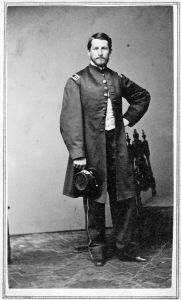
William Watts Folwell
In the 1890s Folwell had proposed several names for parks when he was a park commissioner. Only one of the names he suggested was accepted: Loring Park. He proposed the name to honor his friend and first president of the park board Charles Loring, when Loring left the park board in 1891.
In addition to Loring Park, Folwell’s most lasting naming suggestion came in 1891 when he proposed calling Minneapolis’s system of parkways – first imagined by H. W. S. Cleveland – the “Grand Rounds.”
Other names proposed by Folwell that were not accepted for various reasons:
- Hiyata Lake, for Spring Lake at The Parade, from a Dakota word for “behind the hill” according to Folwell. While the name was never officially adopted when proposed in the 1890s it did appear on several park board maps in the early 1900s
- Accault Parkway for West River Parkway, after Michel Accault, the leader of the French exploring party that included Father Hennepin as a subordinate member
- Lake Medoza, for Lake Calhoun, using a Dakota name for the lake, which meant lake of the “loons”. Folwell, like many others who had fought in the Union Army, wasn’t keen on perpetuating Calhoun’s name, which was so closely identified with the secessionist cause. Folwell was pursuing a graduate degree in Germany when the Civil War broke out; he returned home immediately and enlisted, eventually becoming a Lt. Col. in command of a corps of engineers
- “Alpha” through “Lambda”, letters of the Greek alphabet, for smaller triangular parks – not one of Folwell’s most brilliant ideas.
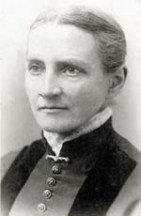
Maria Sanford
I recently discovered a suggestion from 1923 to rename the three bridges over canals linking Cedar Lake, Lake of the Isles and Lake Calhoun after three prominent women in Minneapolis history: Maria Sanford, Beatrice Lowry and Alice Ames Winter. I haven’t found a record of what became of that idea. They would all be excellent additions to park nomenclature.
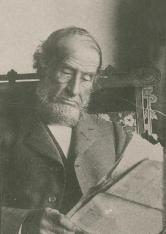
H. W. S. Cleveland
If you have followed this blog for some time you know that I must close with a plea to add a name to this long list: Horace William Shaler Cleveland.
It remains astonishing that one of the people most responsible for the creation of this marvelous park system is not included among the many who have had their names memorialized in it. There is still time to make that right!
David C. Smith
A few moments later: Thanks to MaryLynn Pulscher, I have added the name of Roger Imme to the list. The recreation center at Whittier Park is named for him. If I got paid for writing these pieces, MaryLynn would get paid as my editor!
3/25: I just added three names I had overlooked in the park system. The Reed Sweat Family Tennis Center at MLK Park was not named by the Minneapolis park board but does operate through a lease agreement within a park. The center is named for Lachlan Reed, his wife Martha Sweatt Reed and her father Harold Sweatt, who founded InnerCity Tennis.
As for fake names, there were no Isles brothers to my knowledge only real islands, although the number of isles in the lake has changed a few times. The present islands, two in number, are known as Raspberry and Mike. I have no idea who Mike was and have not included the name in my list. Maybe she was the little sister of the Isles brothers.
 Minneapolis Park History