Archive for the ‘Minneapolis Parks: General’ Category
A World Record on Lake of the Isles Ice
Filed under: Minneapolis Parks: General, Winter Sports | Tags: Lake of the Isles, Minneapolis speedskating, Powderhorn Lake
 Leave a comment
 At a time when ICE is deservedly getting a bad name in Minnesota and around the world, I wanted to direct attention to some uses of ice in Minneapolis that were not immoral, unConstitutional, or unChristian.
While researching another topic recently I came across this illustration in a Bartlesville, Oklahoma newspaper from 1936. I had to investigate further.
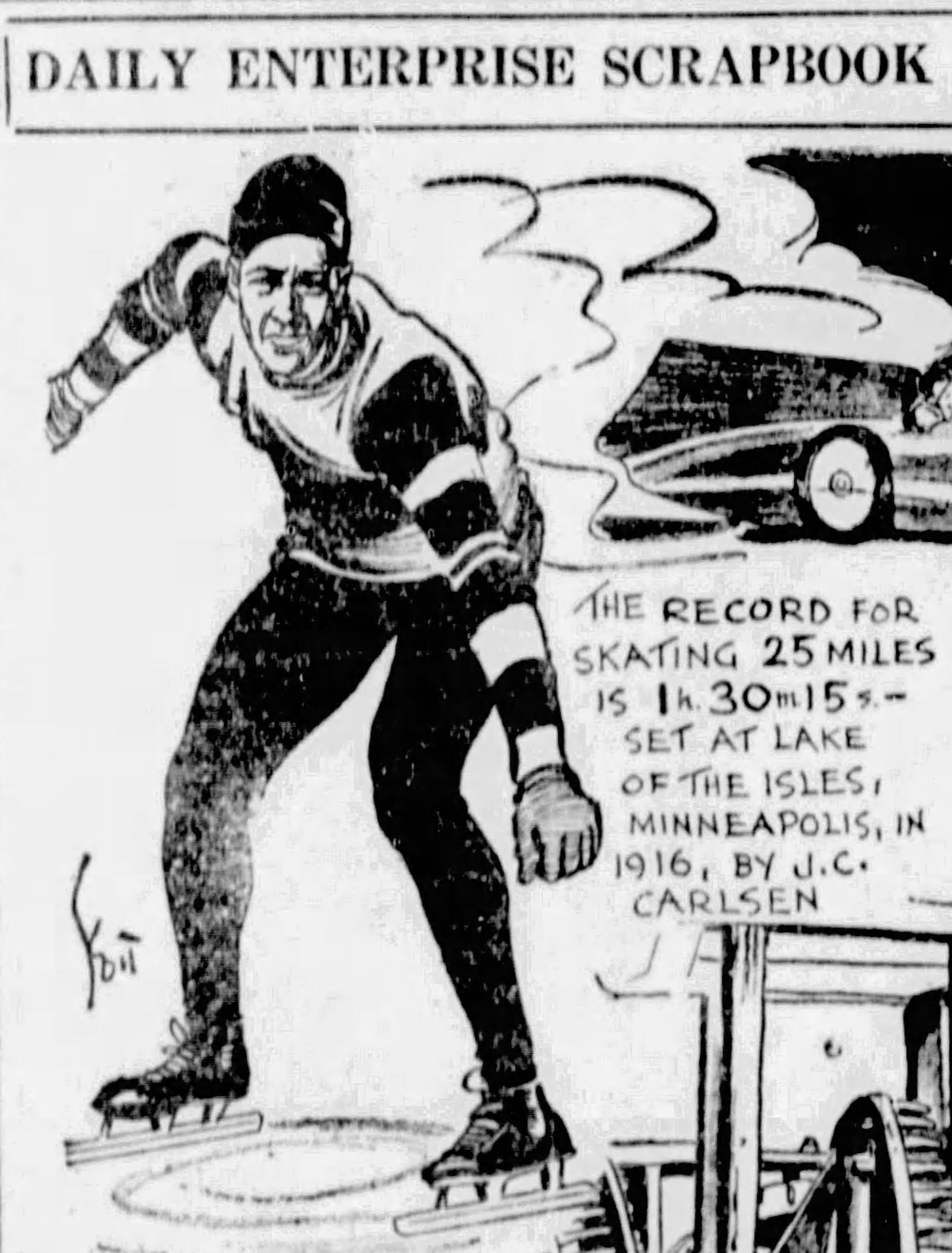
The record, listed as a world record for the distance, was recorded on February 6, 1916 on a quarter-mile skating oval on Lake of the Isles. The man who set that record was John Karlsen, a 41-year-old resident of Minneapolis, who also claimed the world records for distances of 20 miles, 52 miles and 100 miles set at races in Duluth, Winnipeg and Minneapolis respectively.
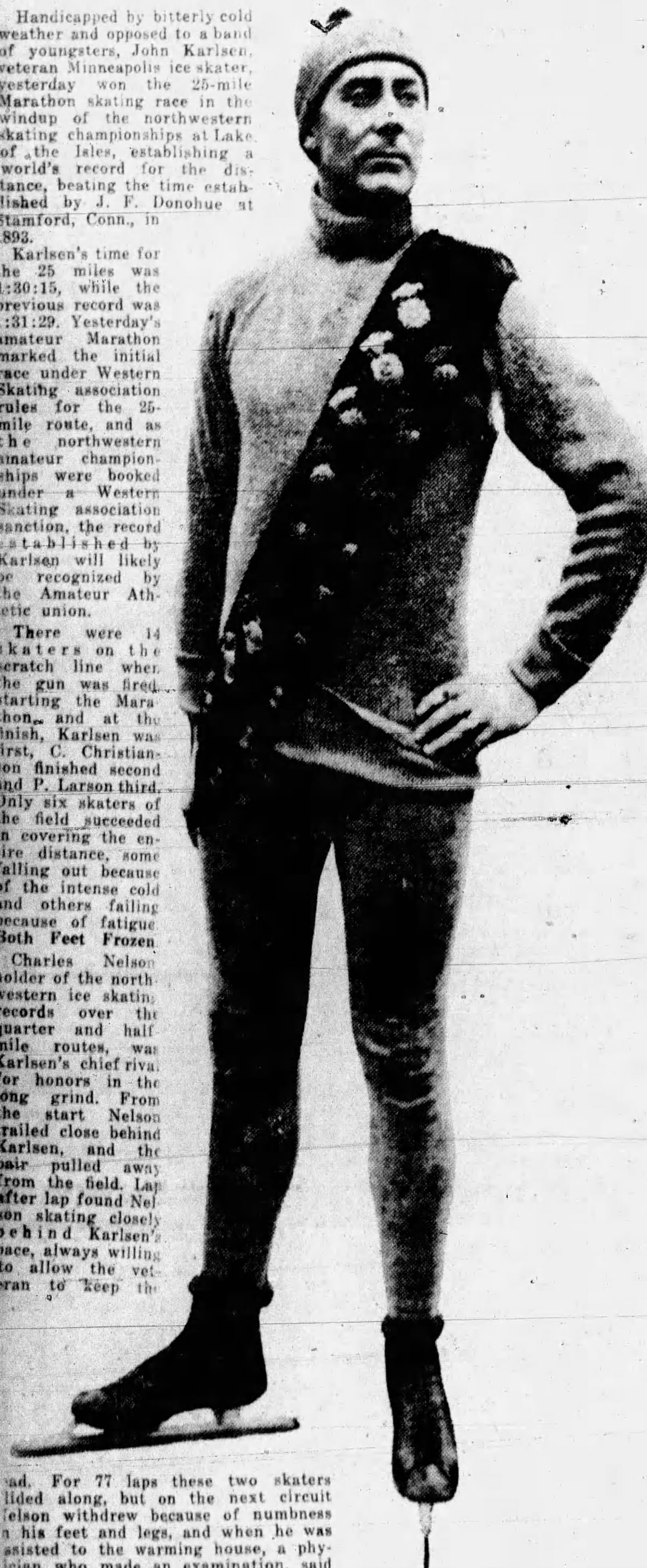
Karlsen set his record on a frigid Sunday afternoon. Temperature at race time was barely above zero but dropped to -9 that night. The wind was gusting up to 26 miles an hour, which made a world record, even at a seldom-skated distance, that much more impressive. Karlsen’s closest pursuer for much of the race withdrew at just under the twenty-mile mark with severely frostbitten feet.
Karlsen had come out of a five-year retirement the day before when he entered a three-mile race as part of a two-day competition sanctioned by the Western Skating Association. In that race he was still lacing up his skates when he was informed the race had just started. He threw off his coat, jumped onto the ice and raced to catch the pack of skaters already half a lap ahead. American speed skating then featured pack races, instead of individual time trials which was the European standard. Karlsen caught the pack within a few laps and won the race easily. He then lost the five-mile race by three feet.
Karlsen was one of three Minneapolis skaters who together held half of the world’s 32 records at various mile-related distances. (European competitions were measured in meters, not miles or fractions thereof, but some of the top European skaters did race at mile distances in the U.S.) In the late 1800s John S. Johnson, of Minneapolis was one of the world’s fastest skaters at distances from one to ten miles and he also held speed records on a bicycle! He was succeeded in the early 1900s by John Nilson who skated to world records at two, three, and four miles.
But it was John Karlsen who was the champion marathon skater. And he was remembered for it, even in Oklahoma 20 years after breaking the world 25-mile record on a freezing Sunday afternoon on Lake of the Isles.
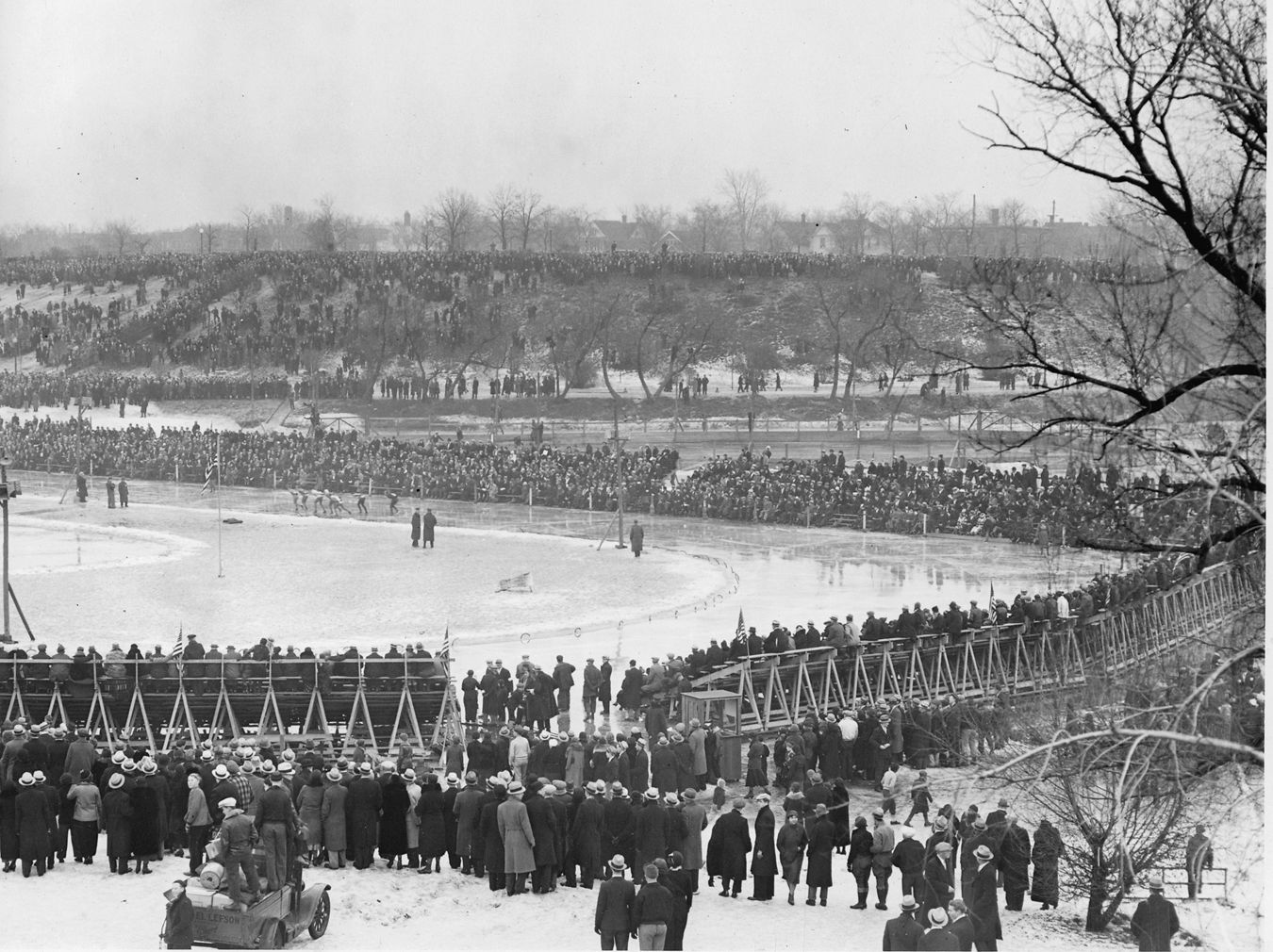
The skaters from across the northwest were not the only racers on Lake of the Isles ice that winter. There were horse races — trotters — on Saturday afternoons on a half-mile track on the other side of the lake.
Speedskaters continued to compete at Isles until 1929 when the first speedskating oval was created at Powderhorn Lake. That racetrack soon became the premier speedskating venue in the United States and produced many of the United States’ Olympic speedskaters after World War II through the 1950s.
For a more complete history of speedskating in Minnesota, see “Aces of Ice” in Twin Cities Sports: Games for All Seasons from The University of Arkansas Press.
David Carpentier Smith
Oppose Closed Parkways
Filed under: Minneapolis Parks: General | Tags: Closed Parkways, Minneapolis Park Board, Minneapolis parks, Open Parkways
Comments (11) The park board is considering a measure tomorrow evening that I oppose and I hope you will, too. It’s not too late to make your thoughts known to your park commissioners.
The intent of the mean-spirited, elitist, and deceptively named “Open Parkways” measure is to “close” parkways to all but the young, healthy, and wealthy. It would close parkways to cars.
Who will use “open” parkways? The wealthy people who can afford homes on or near the parkways and those with the resources to buy fancy bicycles or baby joggers and the good health or strength to be able to use them — in any weather!
And its redundant as well. We always brag about our 50-plus miles of bike and walking paths — and we should. They are a remarkable amenity. But I can’t think of a section of parkway that does not have adjoining paths for non-motorized locomotion (although there are several sections of paths that do not have adjoining parkways).
Without vehicle access to parkways will people throughout the city put their families, including little kids and grandparents, on bikes and ride out for a nice picnic on a parkway miles away? What becomes of people like my Mom, who just turned 99 and loves the parkways. She and my Dad who died at 95, could only enjoy our spectacular parkways, especially along the river and lakes, in their later years from a vehicle they did not have to self-propel. I’ll get to that place in the not-too-distant future. You will too.
“Closed Parkways” will effectively extend the front yards of many of our more-affluent neighbors who live along the parkways to the lakes, creeks and river we now all claim as ours. And I believe it is a “gift” most of them have not requested. I suppose the rest of us will still be able to see a lake, creek or river between their houses.
Our celebrated park system was built on the principal that parks and parkways would be open to everybody, not just the few with fine bicycles, Spandex shorts, cool helmets, and maybe some soft, padded, fingerless gloves.
Contrary to how it’s being sold, this is one of the most blatant examples of elitism in recent park history. Park commissioners already have the authority to close parkways to vehicles for any occasion they want, so why do they need to make them inaccessible to all but the healthy and wealthy permanently?
I’ve heard the claim that the effort tonight is only targeted at downtown riverfront parkways and is only a pilot program. Subterfuge! The proposal is clearly pretense for closing many more if not all parkways to motorized vehicles. Proponents of the measure tried and failed to shut down parts of Minnehaha Parkway to cars a couple of years ago, so they picked a section of parkway on each side of the river downtown that might not arouse the same howls of elitism. But it is as elitist now as then. The section of parkways proposed for closure lies between the river and some of the highest concentrations of high-income households in the city. Nice to keep the rest of us from crowding the parkways there.
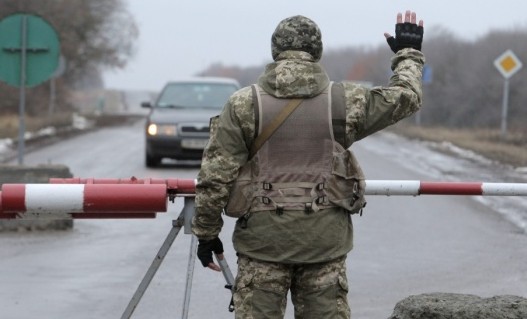
The “Closed Parkways” proposal includes developing a “tool kit” for closing parkways. If the intent isn’t to close more parkways more often, then what purpose does a “tool kit” serve? Part of that “tool kit” will be barriers that could be lowered to prevent vehicle access — like military checkpoints in old Mission: Imposible movies. Permanent fixtures at park intersections. The image that pops up is armed goons demanding, “Show me your identification (or bike license) now! And keep your hands where I can see ’em.”
Proponents of the measure to close off access to the parkways for most of the population claim that one goal is to eliminate the cost of putting up temporary closure signs for special days or events. Will installing permanent railroad-crossing type barriers at all parkway intersections be cheaper? When the ominous arms come down will park workers no longer have to put up signs that tell drivers when and how long the parkways will be closed? (Hmmm, they won’t if the closures are permanent!) How will those looming arms be lowered? Remotely? Electronically? That sounds expensive. Do we need a pilot program to estimate those costs? And won’t those slightly menacing traffic arms be a picturesque addition to our idyllic park landscapes? Wouldn’t the real cost savings be just to skip this disingenuous step and close off the entrances to parkways with curbs or berms from the start?
Proponents claim closing parkways will address over-crowded walking and bicycle paths. If that is the objective, perhaps they should close the parkways to bicycles too to avoid speeding cyclists running down pedestrians who need to overflow onto parkways.
I am also puzzled why “Closed Parkways” is the highest priority of the new park board — such that it supersedes all other business. This is the most pressing issue facing our parks? Keeping all but the young, healthy, and wealthy off our parkways? Is this what voters prioritized when they marked their ballots? If this is representative of the new park board’s priorities, I’m worried.
Will the extension of the Great River Road through Minneapolis, for which park commissioners and staff, and our representatives in St. Paul and Washington fought so hard, be dismantled so cavalierly? The amazing development of the Central Riverfront in the last forty years is due above all to the work of the park board to make the river an amenity rather than an outdated, no-longer-needed industrial yard. Opening the river to the city and all of its citizens is one of the greatest accomplishments in the park system in the last half-century. Let’s not undo it — or use it as an incremental step to closing more or all parkways to vehicles. No more “pack up the babies and grab the old ladies and everyone go…” as Neil Diamond once sang.
David Carpentier Smith
Correction. Since publication I have thought of a couple parkways without separate bicycle paths: portions of Linden Hills Parkway and Kenwood Parkway. Any others come to mind?
ICE-free Paths
I got a welcome notice from the park board this afternoon that crews are taking advantage of warmer weather to clear paths and apply sand where necessary after recent rain and snow and freeze-thaw cycles.
I applaud those and all other peaceful efforts to remove treacherous ICE from our paths and sidewalks and prevent further buildup.
David Carpentier Smith
The Fort Snelling All-Star Basketball Team
Filed under: Minneapolis Parks: General | Tags: Augsburg College, Dan Fukushima, Fort Snelling Basketball, Japanese American Prison Camps, John Leddy, John Okamoto, John Oshida, Military Intelligence Service Language School, Nisei basketball, Wataru Misaka
Comments (7) Today’s story is not about a Minneapolis park, but grew out of research into a basketball league run by the Minneapolis Park Board. Park league basketball, football and baseball games were for many years among the city’s leading sporting events.
—–
How a basketball team of Japanese Americans was assembled at Fort Snelling in the 1940s is a story of war, injustice, and patriotism. Why they were so good is beyond explanation.
Months before Pearl Harbor, the U.S. military knew conflict with Japan was possible and recognized that the U.S. would need people who could read and speak Japanese as an integral component of military intelligence. Where could the U.S. military find Japanese speakers? There were about 110,000 people of Japanese descent living along the west coast of the United States. So, in November 1941 the U.S. Army began to set up a Japanese language school at the Presidio in San Francisco. Barely a month later Japan attacked Pearl Harbor and the U.S. and Japan were at war.
The plan to develop a corps of Japanese speakers and readers appeared prescient, but what followed made the job of military intelligence much harder. People of Japanese descent living on the West Coast were imprisoned. All of them. American citizens included. They were sent to ten hastily concocted prison camps that were deplorable in every respect — from concept to administration to location to construction. That meant of course that the hope to run a language school for Japanese American students in San Francisco was no longer possible. They had been scrubbed from the landscape.
The Army searched for another site for its language school. What it found was an abandoned Depression-era Civilian Conservation Corps camp near Savage, Minnesota, a half-hour drive southwest of Minneapolis, and a governor, Harold Stassen, who was not afraid to have Americans of Japanese ancestry living and learning among his constituents. Minnesota did not have a history, as some western states did, of prejudice against Japanese. In fact, few Japanese had settled in Minnesota; the 1940 Census counted only 51 people of Japanese descent in the entire state.
Of course, that didn’t exempt those few from mistreatment in December 1941. Ed Yamazaki, who ran Ed’s Café on West Broadway in Minneapolis and lived in the leafy Linden Hills neighborhood was visited by police and agents of the Treasury department at work the day after the Japanese attack on Pearl Harbor. They shut down his restaurant. He was allowed to open his restaurant again three days later, but his bank accounts were frozen and he was allowed to withdraw only $200 a month for living expenses. The same conditions were reported to have been imposed on a gift shop owner in St. Paul. These were apparently the only two businesses owned by persons of Japanese ancestry in the Twin Cities.
Perhaps someone feared that if they had spare cash laying around they’d send it to the Emperor. Yamazaki had lived in Minneapolis since 1914. His son had been a record-setting intermediate speed skater at Powderhorn Lake in Minneapolis before the war and was a U.S. Army Staff Sergeant at the time of Pearl Harbor. You couldn’t be more Minnesota than that. “We are sorry to see the war come,” Yamazaki said, “But what can we do? My family and I have no ties in Japan.”[1]
The Army’s task of developing Japanese language capabilities proved harder than initially imagined because the assumption that young men of Japanese ancestry would be able to speak their ancestral language was false. The Army was shocked to discover that only about 3% of the 3,000 Japanese-Americans already in the Army could speak their parents’ or grandparents’ language even a little bit. Despite that drawback, the Army still focused on the Japanese American community for students for the Japanese language program. Fortunately for the Army, although they and their families had been imprisoned because they were suspected, without evidence, of being potentially sympathetic to the enemy, many Japanese American men were American citizens and could be drafted into military service. Also fortunately for the Army, although their rights as American citizens had been suspended, thousands more Japanese Americans enlisted to fight for those rights for others.
The Military Intelligence Service Language School at Camp Savage opened in May 1942 but outgrew the outdated camp. In August 1944 the entire language school, about 1800 students at the time, was moved to Fort Snelling, a fort established in 1820 on a bluff at the confluence of the Minnesota and Mississippi Rivers just south of Minneapolis. In all, 6,000 Japanese Americans went through the language school. (More than 30,000 Japanese-Americans served in the U.S. military during the war, including a division that fought with great distinction and suffered staggering casualties in Europe.)
The U.S. Army provided what recreational opportunities it could for the soldiers learning or perfecting Japanese language skills at the Fort, even though the demanding language courses of six to nine months duration left little time for recreation. Several sports were encouraged, basketball among them.
The Fort basketball players were good, so they entered a Fort “all-star” team in the top recreational basketball league run by the Minneapolis Park Board in January 1945. The highly competitive Park National league had for years featured the best basketball in the city, before the arrival of professional basketball and the Minneapolis Lakers. And even though the talent level had dropped during the war due to so many young men in military service, many excellent players still filled the rosters of the eight-team league. Especially big men. Players over 6’6” and those with bad knees, eyes or ears, even asthma, (maybe bone spurs) were exempted from service.
Many armed forces teams featured superb players during the war years and the Fort Snelling team was no exception. Still with a roster of men most of whom were well under six-feet tall — various newspaper articles calculated their average height at 5’6” — the success of the Fort Snelling team must have surprised local players and observers. All but two players on the team were of Japanese ancestry.
The leading scorer was Wataru Misaka. In a day when college basketball stars shined less brightly than today, Wat Misaka was a superstar. He would become even better known within a couple years. Misaka had starred for the University of Utah team that won the NCAA championship in March 1944 at Madison Square Garden and then defeated the National Invitational Tournament (NIT) champion, St. John’s University, on its home court in a playoff game to raise money for the Red Cross. Misaka and teammates won the hearts of New York City’s hard-core basketball fans in the process.
The day Misaka returned to Utah from New York to a hero’s welcome he also received his draft notice. Misaka had grown up in Ogden, Utah and like many other Japanese Americans in Utah, both in and out of internment camps, he ended up at the Fort Snelling language school. He was not the only player on that team with hoops cred.
Masaru Nishibayashi had played at Los Angeles Community College before he was imprisoned with his family at Denson, Arkansas. He was released from the camp to attend the University of Cincinnati where he played basketball for the Bearcats before entering the Army.[2] At 6’2” he was the tallest man on the team. He was also one of two players who played portions of the 1944-45 and 1945-46 seasons with the Fort Snelling team, because his language training was interrupted by attendance at Officer Candidate School in Georgia. He was one of the few Japanese Americans offered the chance to become an officer.
Another former college player on the 1945 team was John Oshida. He followed a most unusual path to Fort Snelling. He grew up in Berkeley, California where he was a star athlete. He was a freshman at the University of California when the war and imprisonment of Japanese Americans began, but he had a unique family connection.
When the Army began to put together a Japanese language program in San Francisco, one of the first hires as an instructor was a young man who had been born in the U.S. and graduated from Berkeley High School, but had returned to Japan for his college education at Meiji University in Tokyo. He, therefore, not only spoke and read Japanese as a native, but he was familiar with Japanese military terms and usage because, as all Japanese college students, he had been required to attend military training. He had worked most recently in the Japan pavilion at the Golden Gate International Exhibition. His name was Akira Oshida. He was John’s older brother.
When the MIS language school was established in Minnesota, Akira Oshida moved east to teach there and was able to get his brother out of the prison camp at Topaz, Utah and brought him to Minneapolis where he enrolled at Augsburg College in January 1944. John immediately joined the college basketball team, along with another Japanese American, Joe Seto, and became a starter for the Auggies.[3] Despite his unimposing wiry frame and wire-rimmed glasses, he had an immediate impact on Augsburg’s performance and created quite a stir in the state. A newspaper repeated a rumor, not true, that he had been a freshman basketball star at USC before the war. In the spring of 1944, he played doubles in tennis and shortstop and pitcher for the Auggies baseball team. He had pitched previously for the Post Office team at the Tanforan Assembly Center in San Bruno, California in the summer of 1942. Tanforan was a horse racetrack near San Francisco where Japanese Americans lived in former horse stalls for several months until they were shipped to other prisons. Most were transferred to the bleak high-desert prison at Topaz, Utah.[4]
Sidebar: Ideals Never Lost
The Totalizer was a mimeographed newspaper produced at Tanforan Assembly Center by internees, many of them American citizens, who were held without rights or redress until they were shipped to one of ten prison camps. The editorial in the July 4, 1942 issue of the Totalizer contained these words: “The ideals which germinated in the birth of this nation as a free people are as valid today as they ever were. They still form the one bastion of man’s hope for a better world, unburdened of the weight of fascist tyranny. If we allow the apparent anomaly of our particular circumstances to tarnish our faith in the tenets of the democratic creed, we are divorcing ourselves from the current of humanity’s highest aspirations. In our observance of July Fourth, then, let us not speculate idly and fruitlessly on the special constraints and hardships—and, in many cases, the seeming injustices—which the fortunes of the present war have laid on us. Rather, let us turn our thoughts to the future, both of this country and of our place in it. It is our task to grow to a fuller faith in what democracy can and will mean to all men. To stop growing in this faith would be to abandon our most cogent claim to the right of sharing in the final fruits of a truly emancipated world.”
The sports columnist for the Augsburg College Echo, also a member of the basketball team, wrote, “Augsburg College as a whole, and specifically the basketball team, ran into some good luck this semester when Joe Seto and Johnny Oshida, two Japanese Americans from the West Coast, enrolled in Auggie Tech…Both of these likable fellas have proved their worth on the Augsburg basketball team.”
The Echo profiled Seto and Oshida as the first Nisei students to attend Augsburg. The profile noted that Oshida had a brother at Camp Savage as well as a sister in Hopkins. The writer encouraged students to talk with Oshida, “If you readers have any other questions about him, or his experience in the relocation camps, just ask him. He’s very willing to supply the answers.”[5]
Joe Seto became the sports columnist in the Echo the next school year and was also named honorable mention on the all-conference basketball team that year.
Another excellent player on the 1945 Fort Snelling team was John Okamoto. He was from the Seattle area where he was reported to have been an all-city high school basketball player at Broadway High School and was rumored, falsely, to have played for the University of California before the war. Okamoto, like Nishibayashi, played for the Fort Snelling team for two years because his post-language-school assignment was to the Fort Snelling HQ.
Only two of the 1945 Fort Snelling All Stars were not of Japanese ancestry. John Leddy was an especially valuable addition because he was six feet tall, providing a bit of height that the team lacked outside of Nishibayashi. Like Wat Misaka, he had the rare distinction of having played on an NCAA championship team, the 1942 Stanford team. While at Stanford he enrolled in an intensive Japanese language course and after joining the Army he was sent to an Army Japanese language program for officers at the University of Michigan for the 1943-44 academic year. Like many other military personnel enrolled in military courses at universities, he was eligible immediately to play basketball for Michigan. He earned honorable mention All-Big Ten that winter, along with teammates Elroy Hirsch, better known as future football Hall of Fame halfback “Crazylegs Hirsch” and Dave Strack who would later coach the great Michigan basketball teams of the 1960s.[6]
The other Caucasian contributor to the Fort Snelling team was Merle Gulick. Gulick had enrolled at DePaul to play basketball, where he would have been a teammate of George Mikan if he hadn’t been drafted into the Army. Gulick was from a famous family of missionaries to Japan and he had been born there and grew up speaking Japanese. He probably had a closer connection to Japan than most of his Nisei teammates. His great uncle was also the famous promoter of physical education in New York City, Luther Gulick. His father was the head of the new Japanese section of the OSS, wartime forerunner of the CIA, and after the war taught Japanese at the University of Chicago. While Leddy was often one of the top three scorers for the 1945 Fort Snelling team, along with Misaka and Oshida, Gulick was a less important contributor on the score board.
Little was known about Wat Misaka and his Fort Snelling team when it entered the top basketball league run by the Minneapolis Board of Park Commissioners in January 1945, least of all that they were studying Japanese in a secret military intelligence program. The purpose of their study — the entire Fort Snelling program — was not revealed until after Japan’s surrender and the war was over. The U.S. Army didn’t want Japan’s leaders to know that its written and spoken communications were being intercepted and understood. (Many American military communications in the Pacific truly were indecipherable as they were conducted by the famous Navajo code talkers.)
The clear favorite for the title of top amateur team in Minnesota in 1945 was a team sponsored by Ruff Bros., a chain of three grocery stores in Minneapolis. The captain of that team was Jerry Ruff, who had played college ball at St. John’s University in Minnesota. Led by former Gopher great, John Kundla, Ruff Bros. were undefeated in 1944 and many anticipated a similar performance in 1945 even without Kundla who had taken the coaching job at St. Thomas College in St. Paul. Ruff Bros. had won their first two games in the Park National season with ease, as had the Fort Snelling team.
When Ruff Bros. swamped the Citizens Club team 49-17 in the second week of play a Minneapolis Star sportswriter proclaimed that it “dispelled all doubt” that they were the team to beat in the city’s top league. But they would be beaten. A tight win by the soldiers over a team of Navy Flyers stationed at Wold-Chamberlain Airport set up a meeting between the two league leaders. The under-sized soldiers won easily, 46-35, snapping the “Ruffians” 26-game winning streak. Wat Misaka was the star, scoring 17 points. Throughout that season, the bigger the game, the more Misaka scored.
The Fort Snelling All Stars only lost a few games that season, one was to St. Mary’s College in Winona, which finished as runner-up in the forerunner of the Minnesota Intercollegiate Athletic Conference (MIAC). They also lost a rematch with Ruff Bros., which left the two teams in a tie for the city championship and set up a playoff for the title. Ruff Bros. won that playoff in a very close game. A three-point half-time lead was nursed into a 42-38 win. Ruff Bros. leading scorer that game was Gordy Flick, a 6’6” former Minneapolis South High School player who had also played at Drake University and for a couple of early pro teams in Wisconsin. The Fort Snelling All Stars, talented as they were, didn’t have answers for skilled players of that altitude.
News of the success of the Fort Snelling team spread to the prison camps. Prior to an Army tournament in Omaha, Nebraska, the Minidoka Irrigator, the newspaper of the Hunt, Idaho prison camp, where 10,000 Japanese Americans were imprisoned, ran a story about the team. It was written by Pvt. Peter Ohtaki, a Fort Snelling language student who had been imprisoned previously at Minidoka.
During that season a group of Fort Snelling players travelled on furlough to visit families and friends at the Topaz, Utah prison. While there they played a team of Topaz all-stars. The Fort Snelling players won, but barely, 53-49, suggesting the popularity of basketball and the high skill level in the Japanese American general population. Johnny Oshida and Kenji Hosakawa led the Fort Snelling players in scoring that game.[7]
The following winter the Fort Snelling team was much more visible in the basketball community not only in Minnesota, but Wisconsin, perhaps because the war was over and the Japanese Army had been defeated. It is unclear whether the brass at Fort Snelling or the U.S. Army encouraged greater visibility for the Fort Snelling All-Stars, or if, with the war over, there was less academic pressure on the remaining Japanese language students at the Fort. Whatever the reason, the team embarked on a much more rigorous schedule in the 1945-46 season.
The Fort Snelling Bulletin, the Fort’s weekly newspaper, noted in December 1945 that the team would play a tough schedule on the road but was also entering the city park league again just so others at the Fort would have the opportunity to see them play in town. Except for Nishibayashi, who would only play in a few games before he departed Fort Snelling, and Johnny Okamoto, who would play the complete 1946 season, the entire team was new. Gone were the former college stars, but the Fort Snelling language program still put a very good team on the floor. Okamoto took over the scoring burden from Misaka, Oshida and Leddy. He was backed up by Dan Fukushima, Joe Kadowaki, and George Mizuno among others.
Fukushima was another kid from Berkeley who had reportedly played basketball at Fullerton Junior College. Mizuno was singled out in coverage of Fort Snelling games for his speed and his diminutive stature; he was listed as 5’5.” Kadowaki was called “Big Joe’ in the Fort Snelling Bulletin and described as “hefty, but speedy,” so “big” may not have implied “tall.” Before the war, Kadowaki played for Santa Ana Junior College. Kadowaki was one of the few Fort Snelling players who had served in the famous 442nd Regimental Combat Team, an all-Japanese American unit that had fought with distinction — and suffered one of the highest casualty rates of any American unit — in Italy and France.
The Fort Snelling team played its best game of the year, according to the Bulletin, in the opening round of the U.S. Army 7th Service Command annual tournament in Cheyenne, Wyoming. The Fort Snelling team defeated the tournament favorite from Fort Leavenworth. Fort Snelling lost its next game, however, knocked out of the tourney by the host team from Fort Warren, which was where the Army trained its Quartermaster Corps. Fort Warren featured a 6’6” center who played before and after the war for teams in the early National Basketball League and a 6’3” forward who would become a college star in Indiana after the war. They put the Fort Snelling team at a height deficit, once again, that it couldn’t overcome.
The 1945-46 team played fifty-one games and lost only ten. It split two games with Eau Claire Teachers College and lost in overtime to St. Cloud State College. Both college teams won their respective conferences, which won them invitations to the National Association of Intercollegiate Basketball (NAIB) national tournament in Kansas City. St. Cloud was defeated in the second round by Indiana St., which wasn’t beaten until the national championship game.[8]
Those Fort Snelling losses, like most of their wins, were played on the road. On many weekends the team played four games, usually playing an afternoon and evening game on Sundays. They travelled from southern Minnesota to central Wisconsin to the Iron Range in northern Minnesota. The Fort Snelling team would take on local stars with the money raised from usually sold-out arenas going to some sponsoring charity. Receipts from Fort Snelling games went to everything from the local library fund in Cornell, Wisconsin to the American Red Cross and National Infantile Paralysis Foundation.
The team was nearly universally well-received by local crowds according to newspaper accounts. Of the dozens of articles in Minneapolis newspaper sports pages the team was never called Japanese American and was referred to even as Nisei only occasionally. The team was almost always called the “soldiers” from Fort Snelling. The same was not true for all smaller-town newspapers, which often wrote about the “Japanese American” or “Jap-American” team, although the term appears not to have been used with pejorative intent.
One of the few newspaper references to prejudicial treatment of Fort Snelling athletes came in an article from the Winona Daily News which, when reporting on a local baseball game featuring a team from Fort Snelling, noted that fans had shown “above average respect for the soldier nine. Only once did anyone remark about the nationality of the visitors and he was reported to be somewhat under the influence of liquor.”[9]
The Fort Snelling Bulletin, admittedly not an unbiased source, claimed that the Fort Snelling team was one of the “most popular” and “most respected” teams in the area. Most coverage of their games outside of Minneapolis referred to enthusiastic, over-flow crowds. Their overtime loss to St. Cloud State, for instance, was played before “a shrieking capacity crowd” which witnessed “one of the most exciting games ever played in St. Cloud” featuring the “sharpest shooting show” in years.[10]
A team of Chippewa Falls, Wisconsin all-stars lost to Fort Snelling when, trailing 63-59 with 30 seconds on the clock, the soldiers stole the ball three times and John Okamoto hit three long shots, the last one at the buzzer, to win 65-63. The Chippewa Falls coach told a Bulletin reporter, “You guys are like the Globe Trotters. You can win anytime you want to and stage a close finish to give the spectators a thrill.” He said he was glad the Fort Snelling team didn’t “pour it on” because the fans like to see “a close game with the home team in the running.”
Once again, the Fort Snelling team finished second in the top Minneapolis park league behind many of the players who had played for Ruffs along with several military veterans who had been wounded and discharged from service.
The Fort Snelling All Stars finished their season in mid-April of 1946 with two two-point wins in front of overflow crowds in Buhl and Crosby-Ironton, two basketball hotbeds on Minnesota’s Iron Range. That was not the end of basketball in the lives of the Japanese language students at Fort Snelling, however.
After serving as translator with the U.S. military administration in occupied Japan, Wat Misaka returned to the University of Utah for the 1946-47 season to complete his degree and his basketball eligibility. Utah once again made it to Madison Square Garden in the post-season, this time in the prestigious National Invitational Tournament (NIT). Utah defeated Adolph Rupp’s Kentucky Wildcats in a monumental upset — they were 11-point underdogs — in the championship game largely because Misaka held Kentucky’s leading scorer and All-American, Ralph Beard, to a single free throw, nearly twenty points below his average. One writer said being covered by Misaka was like “getting into a beehive.”
Misaka was so impressive, and so admired by New York basketball fans, that in the spring of 1947 the New York Knicks selected Misaka in the first round of the pro basketball draft.[11] Later that year, Misaka became the first non-white player in league history.[12] Misaka was cut by the Knicks several games into the season and many believed he wasn’t given a fair chance partly because of his ancestry. He toured for a time playing against the Harlem Globetrotters, but turned down an offer to join the Globetrotters from owner Abe Saperstein in order to return to school and get an engineering job.
Both John Oshida and John Okamoto remained prominent in Japanese American basketball circles. In the mid-1950s when a columnist for Shin Nichibei, a Los Angeles newspaper serving the Japanese American community, selected a Nisei basketball All Time Dream Team he picked Johnny Oshida as one of his guards.[13]
Oshida’s postwar prowess was highlighted in a report of a Japanese American basketball tournament in Chicago in 1949. The Chicago team beat Berkeley for the title, but high scoring honors in the game went to a Johnny Oshida of Berkeley with 17. The Chicago Daily Tribune reported that most of the players in the tournament were veterans of the war.[14]
The leader of the champions from Chicago was Oshida’s former teammate at the Fort, John Okamoto. Okamoto became a prominent player and coach in Japanese American basketball circles in Chicago. He led his Chicago team in scoring in the 1954 Nisei North American tournament won by a Toronto team.
One of the leaders of the 1946 Fort Snelling team, Dan Fukushima, became a well-known high school basketball coach in the San Francisco Bay area after the war, a leader of the California Basketball Coaches Association, and 1973 National High School Basketball Coach of the Year while coaching at James Lick High School in San Jose. He had also been chosen as teacher of the year in the San Jose school system in 1967.[15]
A team of players with Japanese ancestry never entered the annual All-Nations Basketball Tournament at Pillsbury House in Minneapolis, but the soldiers team of 1946 came close. That prestigious tournament featured teams of different national heritages and was played every year from 1929 to 1959. The Fort team planned to enter the tournament representing Japan, but a scheduling conflict with an Army tournament prevented them from competing. Despite missing that tournament, the Japanese American players from the Fort had already established their basketball bona fides on the “Pill House” floor by their success over two seasons playing in the city’s top amateur league run by the Park Board.
The 1950 census revealed that more than 1,000 Minnesotans claimed Japanese ancestry, a twenty-fold increase over 1940. Evidently, some Japanese Americans who came to Minnesota to study or teach at Fort Snelling stayed after the war.
[1] Minneapolis Tribune, December 9 and 12, 1941.
[2] Manzanar Press, March 18, 1944. Manzanar was a prison camp in California — one of ten in the U.S. — where Japanese citizens were imprisoned from 1942-1945.
[3] Blickstad, Paul, Augsburg Echo, February 11, 1944.
[4] Tanforan Totalizer, July 4, 1942. Whoever wrote that is a better person than I.
[5] Augsburg Echo, March 24, 1944.
[6] Minneapolis Star, March 7, 1944.
[7] Minidoka Irrigator, February 17, 1945. Topaz Times, February 21 and 24, 1945.
[8] Fort Snelling Bulletin, April 12, 1946.
[9] Winona Daily Times, September 19, 1945.
[10] St. Cloud Times, January 29, 1946; Fort Snelling Bulletin, February 2, 1946.
[11] The Knicks at the time were in the Basketball Association of America (BAA), which the National Basketball Association (NBA) considers its predecessor and incorporates BAA history into its own.
[12] Transcending: The Wat Misaka Story, a documentary film by Bruce Alan Johnson and Christine Toy Johnson, 2008, ReImagined World Entertainment. The film tells the story of Misaka at the University of Utah and the New York Knicks but overlooks his time as a star for the Fort Snelling All-Stars on Minneapolis’s hardwood courts.
[13] Shin Nichibei, February 15, 1955.
[14] Chicago Daily Tribune, November 28, 1949.
[15] Los Angeles Times, August 1, 1987; Joel Franks, Crossing Sidelines, Crossing Cultures: Sport and Asian Pacific Americans,
David Carpentier Smith
Minnehaha Rails
Filed under: Minneapolis Parks: General, Minnehaha Falls | Tags: Bureau of Mines: Twin Cities Research Center, Minnehaha Falls, Minnehaha Limestone Quarry, Mississippi National River and Recreation Area
Comments (10) Rene Rosengren recently sent some photos of metal rails she found south of the Minnehaha Off Leash Dog Park just off the Minnehaha Trail. Any ideas what they are?
I’ve written about the limestone quarry at Minnehaha Park that was operated for just one year by the park board in 1907, but was reopened by the WPA from 1938-1942. I think these tracks are too far south to have been part of that quarry, but the narrow gauge suggests that they were part of a quarry or similar extraction enterprise.


I suspect the tracks were once a part of the Bureau of Mines Research Center on federal land that is now owned by the National Park Service as part of the Mississippi National River and Recreation Area.
Rene and I would be happy to hear any thoughts on the narrow gauge tracks.
David Carpentier Smith
Big Island, Big Book
Filed under: Minneapolis Parks: General | Tags: Big Island, Lake Minnetonka, Minnehaha Creek
Leave a comment Just in time for the history buff on your gift list comes a big book: The History of Big Island, Lake Minnetonka. While the book is richly illustrated with historical photos and drawings, it is much more than a coffee-table book. It appears to be a labor of love by author Paul Maravelas: exhaustively researched, carefully written, and extensively footnoted.

Maravelas covers the entire recorded history of the island–and the lake–drawing from archaeological records, oral histories, journals, letters, newspapers, and official records. He takes the reader through the many purposes the island has served from maple sugar production and wild rice harvesting to farming to amusement park and campsite.
I especially appreciated chapters on what we know of the Dakota use of the island and, years later, the creation of an amusement park on the island and the role played by the streetcar line from Minneapolis. Of course, many of the names that fill accounts of Minneapolis park history pop up in the history of settlement and development at Lake Minnetonka and Big Island, too. As the source of Minnehaha Creek, Lake Minnetonka will always be off interest to many Minneapolitans, although the watershed isn’t the book’s focus.
I would expect everyone who lives at or near the lake would want this book in their library along with all of us city dwellers who appreciate local history and enjoy a good story.
The book is available from Minnetonka Press. Free shipping via USPS media mail is offered on the publisher’s website this month, which is a significant value as the book runs 470 pages and weighs 4 1/2 pounds. As I said: Big Island, Big Book.
David C. Smith
Al Wittman and the Minneapolis Riverfront
Filed under: Minneapolis Parks: General | Tags: Al Wittman, Minneapolis Central Riverfront, Minneapolis parks
Comments (2) His name should be remembered.
Al Wittman died last month at age 91. He was the assistant superintendent for Minneapolis parks from 1969 to 1997 — when the city was just rediscovering the fact that a river ran through it. By many accounts, Al was the principal figure in converting the former industrial riverfront into parks — which led to the revitalization of both river banks and the island in the middle of the city. Al may not have been the front man, but he was the one who got things done, made things happen. People who know will tell you that without Al we wouldn’t have the riverfront amenities we have today. I only met Al once, but I could tell from a brief encounter that those who said he always carried himself with grace and dignity and respect for others were on the money. You can read more about his career and many more accomplishments in his obituary which appeared in the StarTribune July 30. (Thanks to MaryLynn Pulscher for bringing this to my attention while I was out of town.)
Here’s your challenge: What park land or park feature should be named for Al Wittman?
David Carpentier Smith
Open Door at the Superintendent’s House
Filed under: Minneapolis Parks: General | Tags: Lyndale Farmstead, Theodore Wirth
Leave a comment Today and tomorrow, May 13 and 14, the Minneapolis Park Superintendent’s House in Lyndale Farmstead Park will be open to the public from 10 a.m. to 5 p.m. It’s a rare opportunity to see the interior of the home–and office–built for acclaimed Park Superintendent Theodore Wirth in 1910. The house is currently the home of Park Superintendent Al Bangoura and family. They have kindly agreed to open their historic residence to the public this weekend.
I will be at the house to talk about parks, Theodore Wirth, and the house. I hope you will drop by and say hello. We will even have copies of City of Parks for sale. I would be glad to autograph a copy for you–and maybe one for your Mother for a special Mother’s Day gift. No formal presentations are planned, but we’d be happy to try to answer your questions about the house and park. This will be a great chance for you to meet Al Bangoura and his wife, Kendra Lewis, too. We will also be joined part of the weekend by Dana Wirth Sparks, great granddaughter of Theodore Wirth, and by Mark Ruhe, who lived in the house when his father, Robert Ruhe, was park superintendent in the 1960s and ’70s.
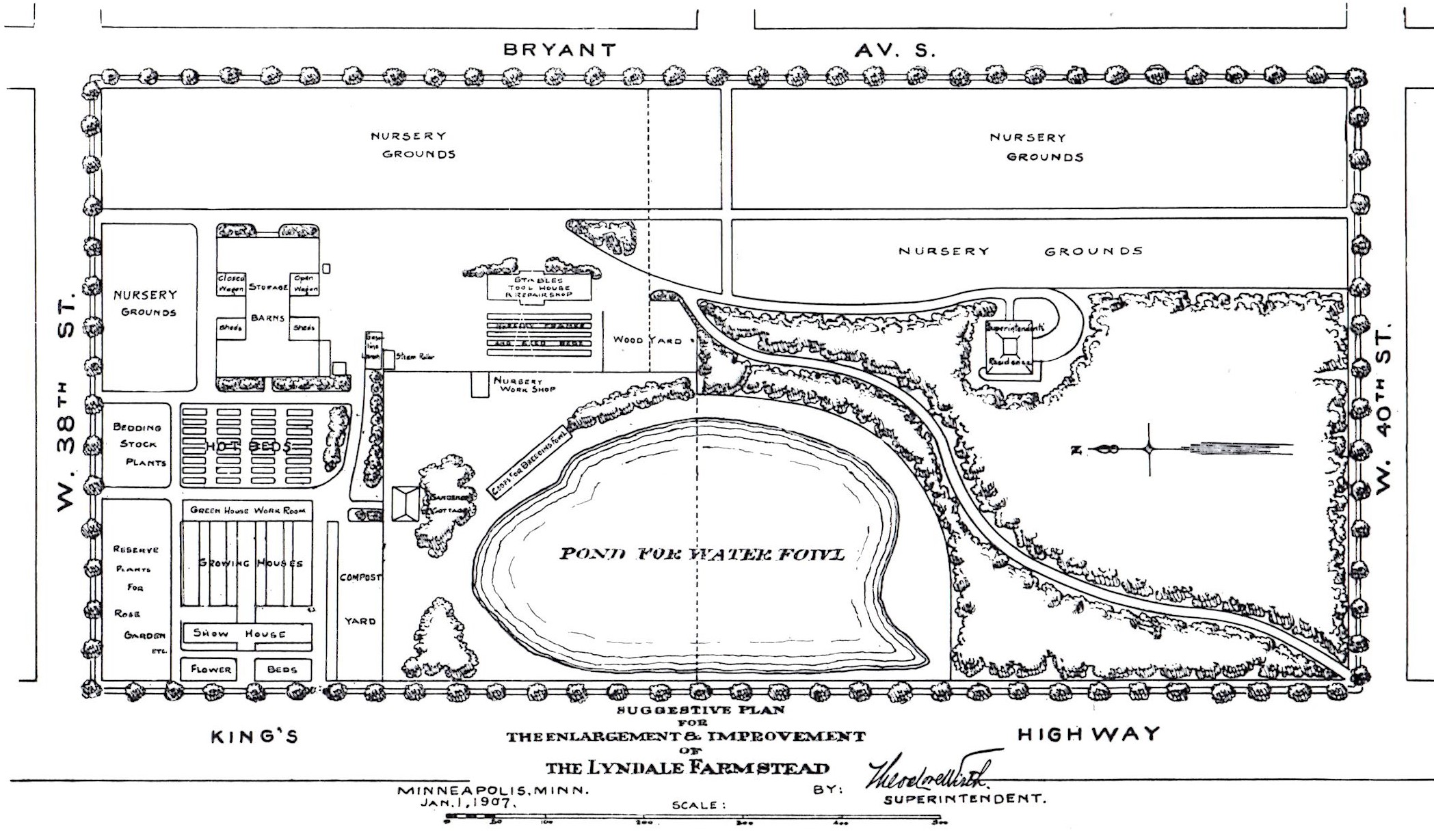
I’ve written about the house and some of the controversy surrounding its construction here. You can read much more about the park and house by clicking on the “History” tab on the Lyndale Farmstead Park page at Minneapolisparks.org.
I hope to see you there. I’ll be on the lower level of the house in what was once a drafting room and Theodore Wirth’s office. A word of caution: the staircase to the lower level is steep and there is no elevator.
David C. Smith
Cleveland and Olmsted Revisited
Filed under: Landscape Architects, Minneapolis Parks: General | Tags: Frederick Law Olmsted, H.W.S. Cleveland, Horace Cleveland, Washburn Fair Oaks
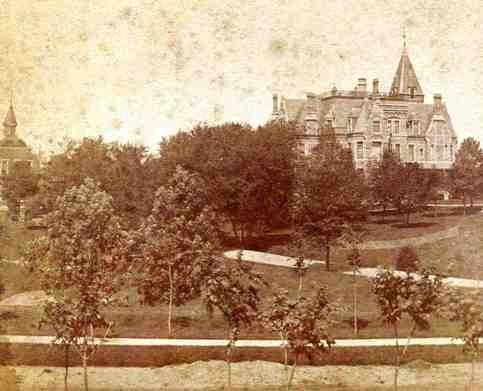
Leave a comment In my continuing effort to restore previously mothballed posts about Horace William Shaler Cleveland, I have reposted three articles from several years ago about the relationship of Cleveland and Frederick Law Olmsted. The question is often raised whether Olmsted designed any parks in Minneapolis. My answer is no — especially Washburn Fair Oaks. See why in these posts from Part 1 in 2010, Part 2, and Part 3.
David Carpentier Smith
Minnehaha Creek Shed Mystery
Filed under: Minneapolis Parks: General | Tags: Minneapolis parks, Minnehaha Creek, Minnehaha Parkway
Comments (12) Here’s your new mystery. (Sorry for filling up your inbox today, but this issue was just raised by a reader as I was posting other things!)
The structure pictured below is on park land just north of Minnehaha Creek and west of Xerxes Avenue. That’s just after the creek enters Minneapolis from Edina. I’ve seen it before and assumed it was on private land. I’m told it’s not.
Was it built as a lift station, pump building, or clandestine meeting place for rogue park commissioners? Any Phryne Fishers or Endeavour Morses out there? Or just humble historians?
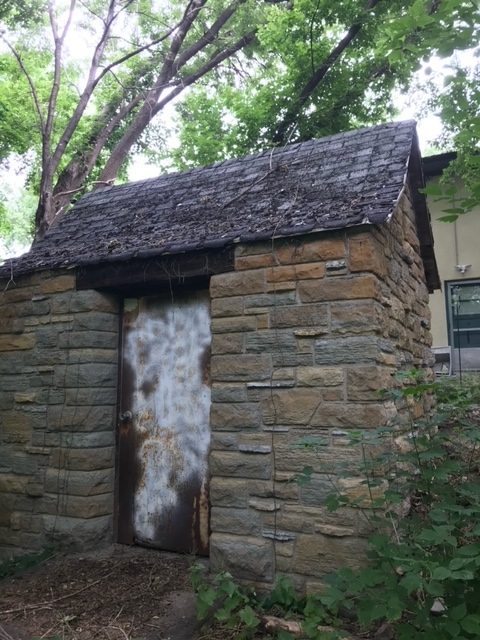

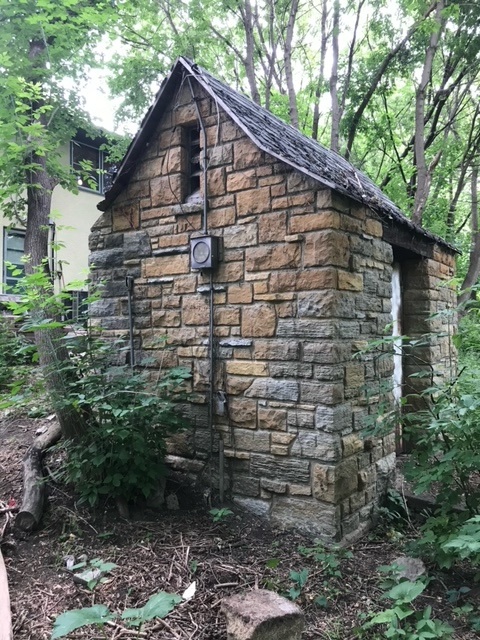
If you know anything, please share. We haven’t found mention of the structure in park records.
David Carpentier Smith
P.S. I think we should have a televised Geraldo-Rivera-style reveal of the inside of the structure. I suspect it was haunted or there were some enormous (yeti?) footprints discovered in the vicinity. Any record of unexplained pulsating blue lights in neighborhood lore? Or perhaps tiny notes left beside tree stumps as elves are wont to leave ala mr. little guy. TPT?
Hall’s Island Redux
Filed under: Minneapolis Parks: General | Tags: Graco Park, Hall's Island
Leave a comment With the Park Board’s request yesterday for input on plans for the new Graco Park at Hall’s Island, I thought it might be a good time to pull out of mothballs my original post on the history of Hall’s Island. The following was originally published in 2012 as The Re-creation of Hall’s Island: Part I. I have restored the link to the original post here, if you’d prefer. I had removed the post from the website because I intended to write much more about changes to the river, but that project is on hold for now and I think this information may be useful as background to those considering the history and the future of the island and surroundings. I must admit that this is one of my favorite posts.
The Re-creation of Hall’s Island: Part I (originally published March 14, 2012)
Before he saved enough money to go to medical school, Pearl Hall’s job as a teenager in the mid-1870s was pitching wood onto a cart at a lumber yard near the Plymouth Avenue Bridge on the east bank of the Mississippi River. He remembered vividly from those days of hard labor what he called a little steeple of land sticking out of the Mississippi near the bridge. He could see the tiny patch of ground when he stood on top of his loaded wagon–and he saw the little steeple gradually grow.

What Pearl Hall saw from his perch of pine was the beginning of Hall’s Island, the island that as Dr. P. M. Hall he would eventually acquire and turn over to the city, the island that became the site of a popular municipal bath house, the island that eventually was dredged onto the east bank of the great river, and the island that the Minneapolis park board will soon begin to re-create as the first step in its RiverFIRST development plan.
Hall didn’t think about that little speck of land again until he was elected to be Minneapolis’s Health Officer in 1901. Then he wrestled with the problem all health officers everywhere wrestled with and usually lost to: how to dispose of garbage. Not just coffee grounds, melon rinds, and chicken bones, but real garbage — offal, dead horses, night soil — where death could take took root and grow.
Continue readingJoe Lillard Superstar
Filed under: Minneapolis Parks: General | Tags: Joe Lillard, Minneapolis football, The Parade
Comments (6) Very few people in the crowd of 15,000 fans who watched the Sunday afternoon park league football game between the Foshays and the Christian Lindsays at Parade field in Minneapolis knew they were watching one of the greatest American athletes of their time. Newspaper coverage of the game, which the Foshays won 26-0, noted only that Joe Lillard played fullback, led the interference on a touchdown run by a teammate, and kicked two extra points. Two weeks earlier, however, the Minneapolis Tribune reported that in the Foshays’ 19-0 win Joe Lillard had played in “his customary brilliant manner” leading the Foshays offense with “a series of spectacular runs.”
The year was 1928. There were no bleachers at the Parade football field, everyone stood. The sponsor of Lillard’s team was W.B. Foshay, whose company was nearing completion of a new business tower in downtown Minneapolis — the tallest building between Chicago and San Francisco. And, although none of the Minneapolis newspapers mentioned it, Joe Lillard was Black. On the football field, he did it all. He blocked, ran, passed, caught, defended, punted and drop-kicked extra points.
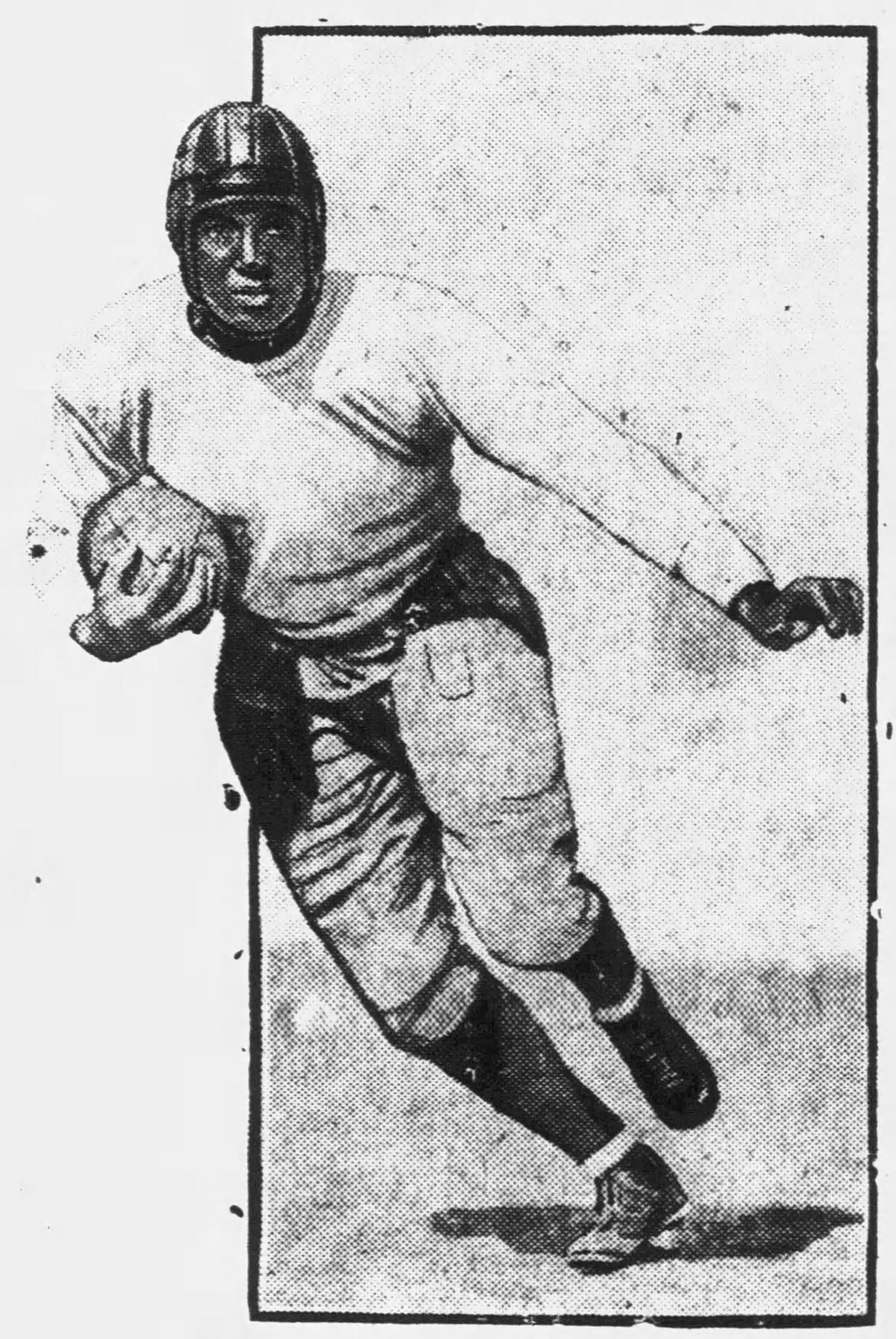
Many sports fans then and later knew Lillard as different things, like the proverbial blind men coming to terms with an elephant. Iowans already knew Lillard as an all-state high school football, basketball and track star from Mason City, a small city about 150 miles south of Minneapolis.
Basketball fans in Chicago, and well beyond, already knew Lillard as one of the best basketball players in the country. He had been one of the stars of the newly formed Savoy Big Five playing at the Savoy ballroom in Chicago in the 1927-1928 season. After the Savoys had beaten the vaunted Pittsburgh Loendis twice that year, Cum Posey of the Loendis claimed Lillard was the best player on that superb Savoy team. In case the name isn’t familiar, Cumberland Posey has been enshrined in both the baseball and basketball halls of fame, so he knew something about players with skills. In his later years, Lillard played some for the Harlem Globe Trotters, but for several winters in his prime he headlined his own successful barnstorming basketball team.
Doc Spears, the corpulent head football coach of the universities of Minnesota, Oregon and Wisconsin in the 1930s, and a real doctor, once called Lillard the greatest all-around athlete he had ever seen. In slightly different language, Brooklyn Times-Union sports writer Irwin Rosee noted in 1934 that Lillard “has generally been recognized as the most versatile colored athlete.” Rosee was writing about Lillard not as a football or basketball player, but as a pitcher for the Chicago American Giants of the Negro League. Two years earlier a Madison, Wisconsin newspaper baseball writer asserted that Lillard “would be pitching in the major leagues if there were not a color ban.” By the way, Lillard could hit and field a little too; he played right field when he wasn’t on the mound for some of the best itinerant baseball teams of the 1930s.
Lillard did make the major leagues in his day in one sport: football. That might be the only reason we know of his athletic prowess. In 1932 the NFL’s Chicago Cardinals signed Lillard as a running back who also substituted as a quarterback thanks to his potent arm. Lillard followed in the footsteps of Fritz Pollard, Bobby Marshall, Duke Slater, Paul Robeson and only a handful of other African Americans who had integrated professional football in the 1920s and 1930s. But Lillard is known today as a football player primarily because he was the last Black man to play in the NFL for 13 years. After Lillard’s second season with the Cardinals, when he was among league leaders as a runner, passer and kicker, he wasn’t offered another contract. The league’s owners refused to hire another Black man from then until the new Los Angeles Rams were pressured into signing UCLA great Kenny Washington before they started playing in the Los Angeles Coliseum in 1946.
Joe Lillard and Kenny Washington, the two men who stood on either end of that 13-year gap of whiteness in the NFL, knew each other well. In April 1945, as World War II was winding down, the USO (United Service Organization) arranged a tour of prominent Black athletes to visit American troops around the world. It was one of many tours featuring entertainers and athletes intended to boost troop morale. Incidentally, both men were coming off their own tours in the military during the war.
Joining Lillard and Washington on the tour were boxer Henry Armstrong and baseball and basketball great Bill Yancey. Armstrong was the most famous of the group because he had held world championship boxing titles in three weight classes at the same time. This was when boxing got more ink in the nation’s newspapers year round than any other sport. Boxing trainer and commentator Teddy Atlas last year selected Armstrong as the greatest boxer — ever. Yancey isn’t as well known today, but as a basketball player for the great New York Rens and a shortstop in the Negro Leagues he would have been known to sports fans, especially young Black soldiers.
The highly successful USO tour lasted three months and circled the globe. Led by sportswriter Dan Burley, the athletes visited Pacific islands, the Phillipines, China, Burma, India, Pakistan, Iraq, Jerusalem, Egypt, and, after crossing North Africa, finally jumped back across the Atlantic from Casablanca to New York.

I wonder what the old NFLer and the future NFLer talked about on those long flights. The two men, both policemen at the time, Lillard in New York and Washington in LA, probably wondered when a Black man would get another chance in the NFL. Just six months after their tour, Washington was signed to fill Lillard’s long-empty shoes. That was still more than a year before Washington’s football teammate at UCLA, Jack Robinson, broke the color barrier in baseball.
We would know a whole lot more about Joe Lillard if he had been white or had lived a few decades later. As it is, Minneapolis can lay small claim to Lillard as a resident and standout athlete in city parks for a couple years. He moved to Minneapolis after leaving Mason City high school in 1927 to be with his girlfriend from Minneapolis, Jewel Bannarn. They were married that year. Lillard’s name doesn’t show up in Minneapolis directories of that time, but he said later that he worked at the Nicollet Hotel on Washington Avenue and Rogers Cafe on South Fourth St. He apparently only played football in the Minneapolis park league for the 1928 and 1929 seasons before heading for the University of Oregon and later the Chicago Cardinals. The only time he was listed in a Minneapolis directory was 1930 when he and Jewell were listed as residing on East Franklin Avenue with her parents and brothers. His occupation was listed then as “ball player” — a more talented one, pick your sport, than many people appreciated at the time.
There is much more to the Joe Lillard story, but that will be a part of a larger work now in progress. I’ll let you know when and where that will be available.
David Carpentier Smith
© 2021 David Carpentier Smith 2021

 Minneapolis Park History