Archive for the ‘Minneapolis Parks: General’ Category
Theodore Wirth Gets a New Home…and Office
Filed under: Minneapolis Parks: General | Tags: Lyndale Farmstead, Minneapolis parks, Superintendent's House, Theodore Wirth, Theodore Wirth House
 Comments (6)
 I think I’ve finally got it: the last chapter in the saga of building a house for celebrated Minneapolis parks superintendent Theodore Wirth at Lyndale Farmstead. The ending is much more intriguing than I had previously known. I discovered it just a little more than 100 years after the construction of the house! The story told in the Lyndale Farmstead pages at minneapolisparks.org is true—as far as it goes.
The comptroller of Minneapolis, Dan Brown, did refuse to countersign the contract between the Minneapolis Board of Park Commissioners and C. P. Johnson and Son to build a house for Theodore Wirth at Lyndale Farmstead, a Minneapolis park. I had previously assumed that because the house was built in 1910 anyway, that the park board had found a way around getting Mr. Brown’s John Hancock on a contract. That was my mistake. The park board finally did get Dan Brown to countersign the contract, but it took a bit of legal work—and a divided opinion by the Minnesota Supreme Court. Continue reading
Documentaries on Minneapolis Parks
A TPT documentary on Twin Cities parks, “Parks for the People,” has been nominated for a regional Emmy award. The awards program is Saturday night in Minneapolis. Good luck to producers Diane Steinbach and Dan Bergin and their crew. The program premiered on TPT last October.
While on the subject, congratulations to Joey Keiski, a seventh grader last year at Lake Harriet Community School, who took second place at Minnesota History Day last spring in the Junior Individual Documentary category for “Minneapolis Parks.”
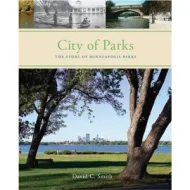
David C. Smith
Was landscape architect Warren Manning the first to propose a public golf course in a Minneapolis park?
Filed under: Landscape Architects, Minneapolis Golf Courses, Minneapolis Parks: General | Tags: Horace Cleveland, Minneapolis golf, Minneapolis parks, Sculpture Garden, The Parade, Thomas Lowry, Warren Manning
Comments (2) Under the headline “Fine Park Is Assured”, the Minneapolis Tribune ran a story on November 15, 1903 that contained details I had never seen on plans for a golf course and baseball field in a Minneapolis park. The basic facts of the article are well-known: Thomas Lowry, along with William Dunwoody and Seurity Bank, offered to donate land at the foot of Lowry Hill for what eventually became The Parade.
What was new (to me) in the story was that when Lowry submitted his proposal to donate land down the hill from his mansion he also submitted designs for the park. The plans were prepared by well-known landscape architect Warren Manning at Lowry’s request. Lowry also offered to foot the cost of implementing Manning’s plan. Lowry eventually did donate thousands of dollars to help the park board convert the land to a park, but Manning’s plans were never mentioned in park board records.
 Minneapolis Park History