Archive for the ‘Bossen Field’ Tag
Forfeited Land, Creative Additions
Filed under: Minneapolis Park Board, Minneapolis parks | Tags: Bossen Field, HI-View Park, Kenny Park, McRae Park, Northeast Athletic Field Park, Peavey Park
 Comments (1)
 I recently received a note from Etch Andrajack about his fond memories of growing up near Hi-View Park in Northeast Minneapolis and what an important part the park played in the lives of his family and friends. His note prompted me to revisit the history tab on the Park Board’s page about Hi-View Park at minneapolisparks.org. (Every park has a history tab. I wrote most of them in 2008, but they are updated by park board staff as new developments warrant.)
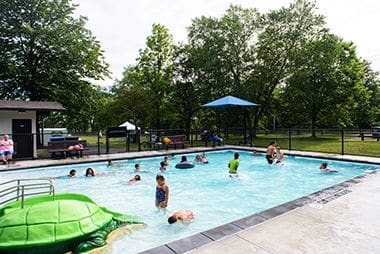
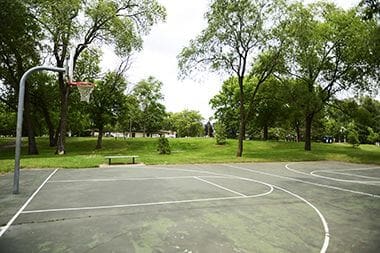
In reviewing Hi-View’s history I was reminded of a tool the park board used to create or expand several recreation parks that are likely remembered as fondly as Etch remembers Hi-View. Landowners who don’t pay their property taxes eventually may forfeit their land. That land can be sold by the state or managed for “public benefit.” The Minneapolis Board of Park Commissioners, as the Park Board was once officially called, acquired the land for Hi-View Park–free–under the public benefit provisions. I’ve cited below a section of the history of Hi-View Park, which I wrote for the park board’s website, that mentions other park land acquired through tax forfeiture.
“Hi-View Park was acquired from the state in 1950. The state had acquired the property for non-payment of property taxes. The original park was 3.74 acres, but was expanded by 0.12 acres in 1961 at a cost of $4,900. The park board acquired the land at a time when it was looking to fill gaps in playgrounds identified in a 1944 study of park facilities. While the neighborhood around Hi-View was not on the list of neighborhoods needing playgrounds, the park board seized the opportunity to obtain free land from the state, when it discovered the land was on the state’s list of tax-forfeited properties. The undeveloped land had been used as a playing field by children in the neighborhood for years.
The first instances of the park board seeking land on state tax-forfeiture lists was in 1905 when it acquired several lots to expand Glenwood (Wirth) Park and in 1914, when it acquired Russell Triangle. With the acquisition of four lots to enlarge Peavey Park and the acquisition of Northeast Field partly from the state’s tax forfeiture list in 1941, the park board began looking to the state as a source of cheap land.
In a matter of a few years after World War II, the park board acquired nearly all of Bossen and Perkins Hill parks and portions of McRae and Kenny from the state for no cost. The park board also eventually acquired part of North Mississippi Park from the state. By the late 1940s, the park board routinely scanned lists of land the state had acquired for non-payment of taxes and spotted the Hi-View land on such a list.”
I mention the acquisition of tax-forfeited land because it underscores the many creative methods used to acquire the land that became a celebrated and heavily used park system. Some parks are used primarily by neighborhood kids, others by people from across the entire city, state and beyond.
The park system is the result, in the end, of dedicated, persistent, efficient, and creative public servants. And it is still operated, managed, and adapted to our ever-changing needs and desires by the same type of praise-worthy public servants to whom we all owe a debt of gratitude. At the very least some respect.
David C. Smith
Minneapolis Park Memory: A Memorable Silence
Filed under: Minneapolis Park Memory, Minneapolis Parks: General | Tags: Bossen Field, Edward Foote Waite, Minneapolis parks, Minnehikers, Theodore Wirth, Waite Park
Comments (1) I was the editor of the Minneapolis Municipal Hiking Club’s monthly newsletter for many years, up through the last month of the club’s existence in October 2010.
One hike I particularly remember took place on Wednesday, September 12, 2001. The Club had an evening hike scheduled for the neighborhood around Bossen Field in south central Minneapolis. Many planes fly over this area approaching the airport, but this was the day after 9/11 and all U.S. civilian planes were grounded by federal decree. It was quite a sensation walking in this area, expecting to hear planes fly over, but hearing none.
George Bridgman

Minnehikers was a popular club. Annual banquet, 1938. (Norton and Peel, Minnesota Historical Society, GV1.22 p87)
Editor’s note: The Minnehikers, as the club was known, was originally organized by the park board’s recreation staff in 1920. According to Theodore Wirth (Minneapolis Park System 1883-1944), the first hike took place on January 10, 1920. Minneapolis Mayor J. E. Meyers, Judge Edward Foote Waite and Wirth led 83 hikers 3 1/2 miles from Minnehaha Falls to Riverside Park.
Twenty-nine years later, the park board named a park for the juvenile court judge who participated that day: Waite Park in northeast Minneapolis.

Waite Park and Waite Park School, the first joint school/park development in Minneapolis in 1949, were named for Judge Edward F. Waite, pictured here with students and teachers at the school in about 1955, when he was 95. (Newburg Studio, Minnesota Historical Society, por 5807 p8)
The mayor’s name is on a park too, the J.E. Meyers Memorial Park in Mound on Lake Minnetonka. Internet sites list it as both a boy’s camp and a cemetery. A mystery to be solved. Of course, we know that Wirth has a park named for him, too.
I would tell more about the Minnehikers, but I hope former members of the group will do that themselves with first person accounts. The club sponsored its last hike in October. Changing times.
David C. Smith
 Minneapolis Park History