Archive for the ‘Kenny Park’ Tag
Forfeited Land, Creative Additions
Filed under: Minneapolis Park Board, Minneapolis parks | Tags: Bossen Field, HI-View Park, Kenny Park, McRae Park, Northeast Athletic Field Park, Peavey Park
 Comments (1)
 I recently received a note from Etch Andrajack about his fond memories of growing up near Hi-View Park in Northeast Minneapolis and what an important part the park played in the lives of his family and friends. His note prompted me to revisit the history tab on the Park Board’s page about Hi-View Park at minneapolisparks.org. (Every park has a history tab. I wrote most of them in 2008, but they are updated by park board staff as new developments warrant.)
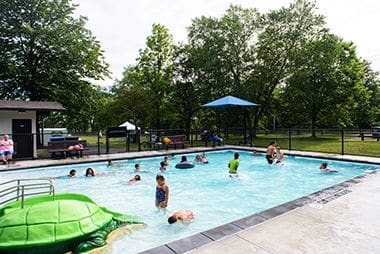
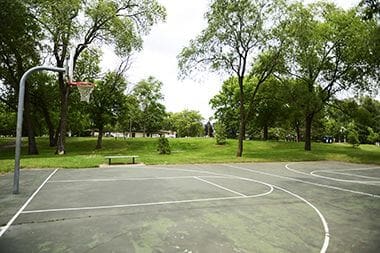
In reviewing Hi-View’s history I was reminded of a tool the park board used to create or expand several recreation parks that are likely remembered as fondly as Etch remembers Hi-View. Landowners who don’t pay their property taxes eventually may forfeit their land. That land can be sold by the state or managed for “public benefit.” The Minneapolis Board of Park Commissioners, as the Park Board was once officially called, acquired the land for Hi-View Park–free–under the public benefit provisions. I’ve cited below a section of the history of Hi-View Park, which I wrote for the park board’s website, that mentions other park land acquired through tax forfeiture.
“Hi-View Park was acquired from the state in 1950. The state had acquired the property for non-payment of property taxes. The original park was 3.74 acres, but was expanded by 0.12 acres in 1961 at a cost of $4,900. The park board acquired the land at a time when it was looking to fill gaps in playgrounds identified in a 1944 study of park facilities. While the neighborhood around Hi-View was not on the list of neighborhoods needing playgrounds, the park board seized the opportunity to obtain free land from the state, when it discovered the land was on the state’s list of tax-forfeited properties. The undeveloped land had been used as a playing field by children in the neighborhood for years.
The first instances of the park board seeking land on state tax-forfeiture lists was in 1905 when it acquired several lots to expand Glenwood (Wirth) Park and in 1914, when it acquired Russell Triangle. With the acquisition of four lots to enlarge Peavey Park and the acquisition of Northeast Field partly from the state’s tax forfeiture list in 1941, the park board began looking to the state as a source of cheap land.
In a matter of a few years after World War II, the park board acquired nearly all of Bossen and Perkins Hill parks and portions of McRae and Kenny from the state for no cost. The park board also eventually acquired part of North Mississippi Park from the state. By the late 1940s, the park board routinely scanned lists of land the state had acquired for non-payment of taxes and spotted the Hi-View land on such a list.”
I mention the acquisition of tax-forfeited land because it underscores the many creative methods used to acquire the land that became a celebrated and heavily used park system. Some parks are used primarily by neighborhood kids, others by people from across the entire city, state and beyond.
The park system is the result, in the end, of dedicated, persistent, efficient, and creative public servants. And it is still operated, managed, and adapted to our ever-changing needs and desires by the same type of praise-worthy public servants to whom we all owe a debt of gratitude. At the very least some respect.
David C. Smith
Parks and Plagues
Filed under: Minneapolis parks | Tags: Cavell Park, Kenny Park, Parade Stadium, polio scare, Sister Elizabeth Kenny
Comments (5) The battle against COVID-19 brings to mind a couple episodes in Minneapolis park history.
Several people have asked if anything similar to the coronavirus-related closures of park buildings has happened in Minneapolis history. From my notes I can find no references to the impact on parks in 1918 of the Spanish flu, but polio did have a significant impact on parks in the years after WWII. The park board’s 1946 annual report notes that there was a sharp upward post-war trend in attendance at parks but it was “cut short” by the polio epidemic. Park superintendent Charles Doell in his segment of the report claimed that most summer recreation programs had to be shut down in July due to the polio scare. Parents wouldn’t allow their kids to go to parks, or beaches, because it was thought that the polio virus was transmitted through bathing water.
The final two weeks of the 1946 concert season at Lake Harriet were cancelled due to the epidemic and community sings were cancelled in July for the remainder of the season due to the polio scare. The sings were conducted for the rest of the summer over radio station WDGY.
The polio scare lasted much longer than we expect the coronavirus scare to last. Three years later, the park board reported that a new spike in polio cases and the associated “scare” had slashed beach attendance in 1949 by 68%. (The polio scare didn’t end until Jonas Salk developed a vaccine for the virus, which went into use in 1955.)

Sister Elizabeth Kenny, 1950. By New York World-Telegram and the Sun staff photographer – Library of Congress Prints and Photographs Division.
The most lasting reminder of the polio epidemic, however, is Kenny Park. The park was named in 1955 for Sister Elizabeth Kenny, an Australian nurse who promoted a successful treatment for many polio victims. There was no cure. (“Sister” was a courtesy title for a nurse in the British Commonwealth, not a religious title.)
Kenny established an institute in Minneapolis, her base in the U.S., for the treatment of polio patients. In 1951 she was named in a Gallup Poll as the most admired woman in the U.S., the only woman to be so named in the first 20 years of the award who wasn’t a First Lady.
One of the only other connections between Minneapolis parks and present pandemic discussions is reference to the Defense Production Authority. President Trump last week invoked this authority, created in 1950 during the Korean War, and later backed away from it, to assert the control of the federal government over producing and securing medical supplies. It is cited now in regard to protective equipment and ventilators, but its application was far broader in 1950.
When the authority was created one of its provisions was to prohibit the construction of recreation and amusement projects in order to conserve materials for defense purposes. The authority would have killed park board plans to build a 17,000-seat lighted football stadium at the Parade. The stadium had been the highest-priority project on the park board’s post-war (WWII) project list.
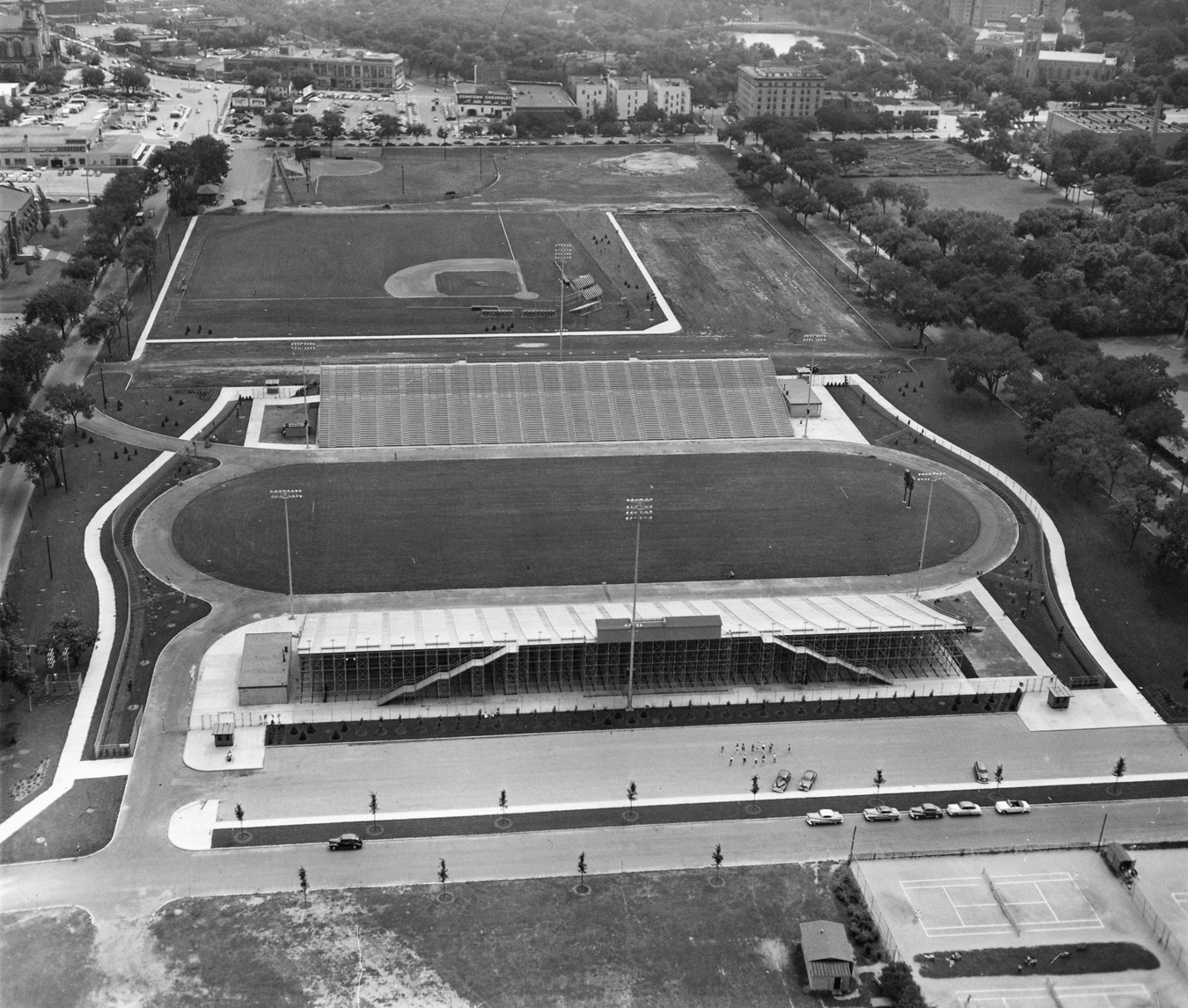
Parade Stadium, 1952. Loring Park in background, Walker Art Center top right. Minneapolis Park and Recreation Board.
Park superintendent Charles Doell and mayor Eric Hoyer went to Washington to argue for stadium construction and came home with approval to proceed because the project was initiated before creation of the Defense Production Authority. Another park project was also given a green light at that time because construction had already begun: Waite Park School and Park, a joint project of the park board and school board.
Can you think of other health-related restrictions on park usage, other than periodic e coli-related beach closures?
Two Minneapolis parks are named for nurses from the British Commonwealth. The other is…Cavell Park, named for Edith Cavell.
David Carpentier Smith
 Minneapolis Park History