Archive for April, 2011|Monthly archive page
Where do you think Andy Warhol got the idea?
Filed under: Minneapolis Parks: General | Tags: Clinton Field Park, Dorilus Morrison Park, Leo Harris, Minneapolis Institute of Arts
 Comments (3)
 This has nothing to do with parks.
From the Minneapolis Morning Tribune, October 30, 1915.
Artistic tomato cans and beer bottles? No, not now, but maybe in the future. Joseph Breck, director of the Minneapolis Institute of Arts, intimated the possibility in an address before the art division of the Minnesota Educational Association today. “When some future historian,” he said, “comes to write the story of nineteenth century art, will he praise our tomato cans, our beer bottles, as the art historians of our day praise the vases of ancient Greece? I fear not. But our industrial arts are improving so rapidly and we have made such tremendous advances on the hideousness of the Victorian era that the time is not far off when the future historian will find much to occupy him in the decorative arts of the coming day. If my statement is borne out it will be largely because we have trained the children to know and to want what is beautiful.”

Beauty in a Can. Andy Warhol
Nothing to do with parks—except I came across the article while researching park issues, precisely the park board service of Leo Harris. Minneapolis developer Ray Harris once commented to me that there were many big battles on the park board in the days his father Leo served as a park commissioner (1915-1918). “It was not all sweetness and light,” Ray said. I was searching the Minneapolis Tribune for reference to some of those battles, when I found the tomato can quote.
One of Harris’s biggest fights was with park superintendent Theodore Wirth over what Harris considered faulty and inferior paving methods on parkways.
But there was some sweetness and light too. In 1916 Harris donated a 12-inch silver trophy that was awarded to the city’s Sunday League baseball champion each year. I don’t know what became of the trophy or how long it was awarded.
The best Leo Harris story I could find was from the Minneapolis Tribune October 27, 1914, subtitled “One Reason Why He Became a Candidate for the Park Board.” Harris said he was walking near his home in the eleventh ward the previous spring when he encountered an army of young children playing in the street. He tried to count them, but the crowd was too large and fluid, so he offered to buy them all ice cream cones. When it came time to settle, he paid for 49 cones. Harris said he became a candidate for the park board a few days later. Harris was quoted as saying, “I love the Park Lakes, the River Drive, the beautiful Minnehaha, but I also believe in giving the children in congested districts a place to play and play right. It is a shame for a city to give these kids only the streets to play in.”
Leo Harris resigned from the park board in 1918 to enlist in the U.S. Army during World War I.
I wrote in a post earlier today that the Minnesota Historical Society photo collection has a picture of almost everything. Here’s more proof: I searched for Leo Harris and while I didn’t find a portrait, I did find his business!
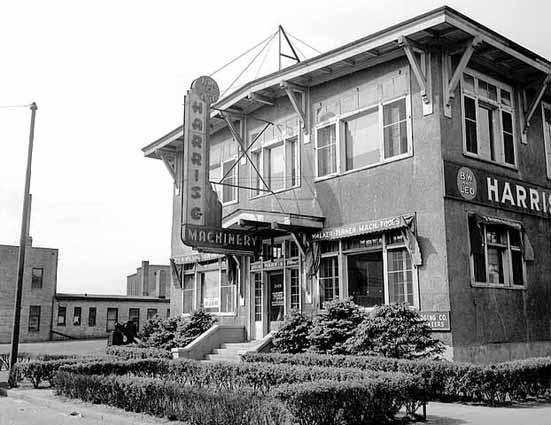
B.W. & Leo Harris Company, 2429 University Avenue Southeast, 1948 (Minneapolis Star Journal, Minnesota Historical Society)
Harris announced the creation of the business in an ad in the Minneapolis Tribune April 23, 1922.
I should also add that the Minneapolis Institute of Arts, of which Mr. Breck was the director when he gave Warhol his inspiration, is located in a Minneapolis park, Dorilus Morrison Park. I knew there would be a picture of that in the MHS collection.

Dorilus Morrison’s home ca. 1900 (Minnesota Historical Society)
This was Dorilus Morrison’s home in about 1900, which his son, Clinton, donated to the park board in 1911 order to build this…
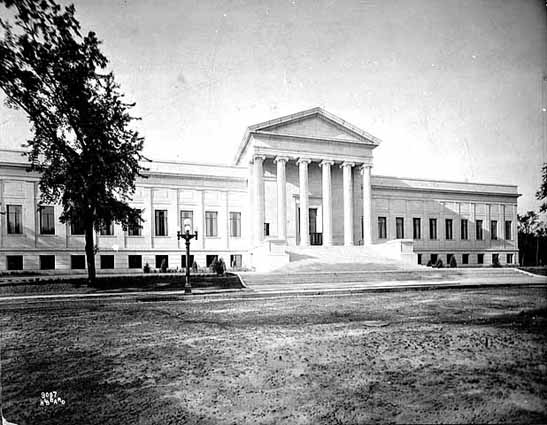
The Minneapolis Institute of Arts, photographed in about 1920, was built in Dorilus Morrison Park. (Charles J. Hibbard, Minnesota Historical Society)
The new Institute opened in January, 1915 and was the site of Breck’s speech later that year. On the day the new building opened, January 7, 1915, a Minneapolis Tribune editorial called it “A New and Powerful Force for Good.”
Dorilus Morrison was instrumental in creating the park board and was a commissioner on the first park board in 1883. Even his son Clinton has a park named for him in a way. Clinton Park was named for its location on Clinton Avenue, but Clinton Avenue was named because it was the street on which Clinton Morrison resided, a block east of his father’s house.
David C. Smith
© 2011 David C. Smith
More on Murphy Square and Augsburg College — and more praise for the Minnesota Historical Society.
Filed under: Minneapolis parks | Tags: Augsburg College, Carl Chrislock, Murphy Square
Leave a comment In response to my request for info on Murphy Square before the freeway, Juventino Meza, a student at Augsburg College, reports that two books provide stories and photos of the Augsburg campus and the neighborhood before the 1960s. He writes that From Fjord to Freeway: 100 Years of Augsburg College, by Carl H. Chrislock, is available at the Augsburg library. He also recommends From Immigrant Parish to Inner-city Ministry: Trinity Lutheran Congregation 1868-1998, by James S. Hamre. The Trinity Lutheran Church building, once located south of Murphy Square and the Augsburg campus, was taken out by the freeway. The latter book is available from Trinity Lutheran Congregation, which still exists and has an office at 2001 Riverside Avenue and a website here.
I have written often of the amazing resource this state maintains in the Minnesota Historical Society. More than once I have noted that regardless of subject, I always check to see if the Visual Resources Database at MHS has a photo. While looking for photos of Augsburg College and Murphy Square I was astonished to find a photo of Augsburg history professor Carl H. Chrislock, author of the Augsburg history Mr. Meza recommended. Here’s proof.
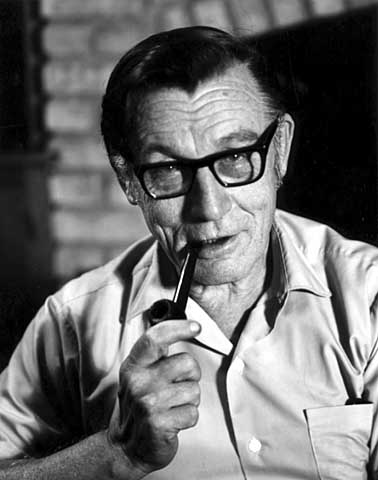
Carl H. Chrislock, professor emeritus, Augsburg College, 1970 (Alan Ominsky, Minnesota Historical Society)
Thanks to Mr. Meza——and to Minnesota legislators for the Minnesota Historical Society. It’s probably a good idea to remind your legislators that the Minnesota Historical Society needs their support.
David C. Smith
Has the Park Board Neglected Northeast Minneapolis?
Filed under: Grand Rounds, Minneapolis parks, Mississippi River | Tags: Columbia Park, Horace Cleveland, Logan Park, Mississippi River, Northeast Minneapolis, Sandy Lake, Theodore Wirth
Comments (2) The argument is sometimes made, particularly by “Nordeasters,” that northeast Minneapolis is park poor and that the Minneapolis park board has neglected that part of the city. “Underserved” seems to be the popular word. The idea even flowed as an undercurrent through the recent Minneapolis Riverfront Design Competition. The thinking goes that ever since Minneapolis and St. Anthony merged in 1872, and took the name Minneapolis, power, money and prestige—not to mention amenities such as parks—have accumulated west and south of the river. (Read Lucille M. Kane, The Waterfall That Built a City, for a fascinating examination of why that might have happened.)
While writing recently about Alice Dietz and the marvelous programs she ran at the Logan Park field house I thought again about the perceived neglect of Northeast and whether it might be true. I concluded that it is not; northeast Minneapolis has been a victim of industry, topography and opportunity, but not discrimination or even indifference. What’s more, all those elements have now realigned, putting northeast Minneapolis in the position to get a far bigger slice of the park pie in the foreseeable future than any other section of the city.
Housecleaning, Maude Armatage, Emma Smith and Earth Day
Filed under: Minneapolis Parks: General | Tags: Alice Dietz, Maude Armatage
Comments (1) Tomorrow will commemorate the 99th anniversary of an event some people in Minneapolis may overlook. On April 9, 1912 a Minneapolis cop, Patrolman Hollison, made what the Minneapolis Tribune called the “first arrest ever” in Minneapolis for scattering refuse — littering. As Patrolman Hollison stood at the corner of Lake and Nicollet he saw someone throw a newspaper out the window of a street car. Hollison boarded the street car and arrested August Davidson of 4724 Clinton Avenue, who pleaded guilty and was fined $1. The fine was suspended — but it was a start. I bet Mr.Davidson never again flung his newspaper out a street car window, even if he didn’t like the editorials. The story was reported under the headline “Newspaper Tosser Nabbed.” Minneapolis Tribune, April 10, 1912.)
Of course one arrest and a one-eyebrow-raised headline didn’t alter behavior citywide. That took time, as illustrated by a series of events more than nine years later. At the meeting of the Minneapolis Board of Park Commissioners on July 15, 1921, in the last item of business before adjournment, commissioners voted to create “a workable plan to ensure that picnic parties clean up the picnic grounds which they have used before leaving the parks.” The motion seemed almost a throw-away before everyone went home for the night, but it provided an opening for the board’s newest member to make herself heard.
When the board met again three days later, commissioner Maude Armatage asked if the Board would like to have the cooperation of the women’s organizations in an educational campaign for municipal housecleaning. The board immediately moved that Armatage “be allowed to obtain the assistance of the women in such work.”
Ten days later, July 28, 1921, Armatage inaugurated a campaign to reduce litter in Minneapolis parks. She pointed out that the city spent nearly $8,000 a year cleaning up park litter, mostly on Mondays after huge park attendance on Sundays, although at popular Loring Park the cleanup often extended into Tuesday. This event also dealt with litter, but much more with the perception of capabilities, roles and rights. It was another first, another start. It was the first action by a woman as a park commissioner. Continue reading
What Happened to Minneapolis-made Cigars?
In light of the tobacco use policy of the Minneapolis park board, which essentially prohibits the use of tobacco in most park areas, I had to chuckle at the entry in the proceedings of the Board of Park Commissioners for April 19, 1916—almost 95 years ago.
Mr. A. B. Weigel appeared that day before the park board as secretary of the Cigar Makers’ Union—Local No. 77 of the Cigar Makers’ International Union of America, according to the Minneapolis Tribune April 20, 1916—to ask that the park board, as far as possible, sell only Minneapolis union-made cigars at park refectories. On the spot the park board adopted a resolution instructing the manager of refectories to, as much as possible, purchase and enhance the sale of products manufactured in Minneapolis.
What surprised me about that news is not that Minneapolis park refectories sold cigars, but that cigars were made in Minneapolis — enough of them that local cigar-makers were unionized.
Current limits on tobacco use in Minneapolis parks went into effect July 1, 2010.
Of course whenever I’m curious about anything from our city’s or state’s past I go to the photo collection of the Minnesota Historical Society to see if there are pictures. Naturally, when I entered the search term “cigar” I found a number of interesting photos. Here are two.
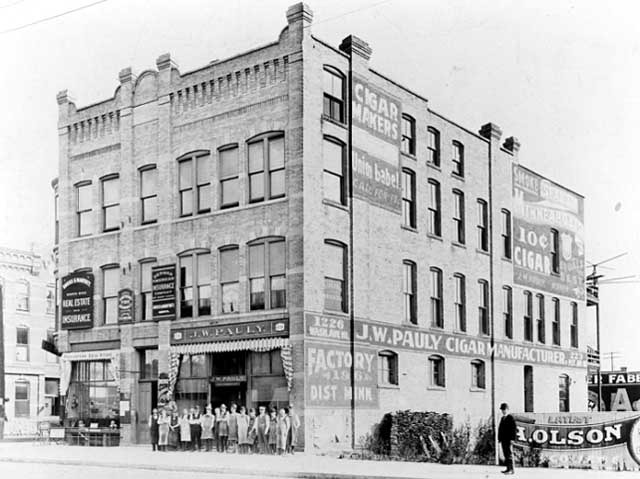
J. W. Pauly Cigar Company, 1226 Washington Avenue North, ca. 1895 (Minnesota Historical Society)
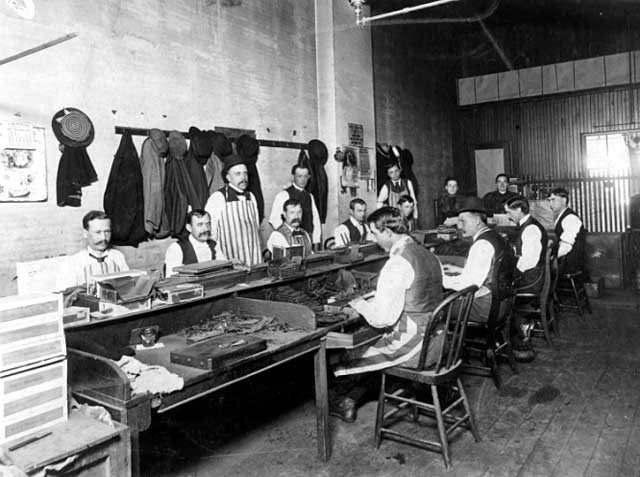
J. W. Pauly Cigar Company cigar makers, perhaps members of Local 77 Cigar Makers’ International Union of America, ca. 1895 (Minnesota Historical Society)
David C. Smith

 Minneapolis Park History