Archive for June, 2019|Monthly archive page
Troublesome Lake Hiawatha
Filed under: Minneapolis parks, Minneapolis Parks: General | Tags: Hiawatha Golf Course, Lake Hiawatha
 Comments (13)
 Of all Minneapolis lakes, the one that might not exist if it hadn’t been dredged nearly a century ago is Lake Hiawatha.
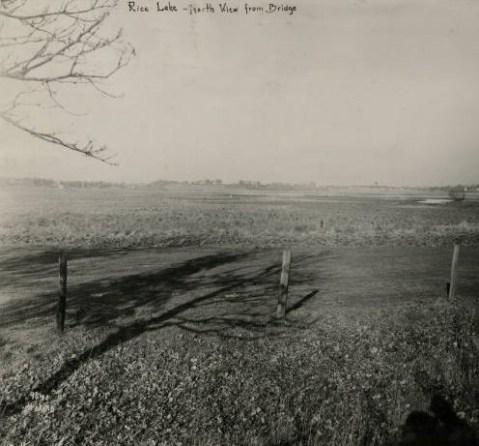
Lake Hiawatha, then Rice Lake, middle right, looking north from bridge over Minnehaha Creek in 1915. (Photo by Charles J. Hibbard from the Minneapolis Park and Recreation Board in the Minnesota Reflections Digital Library.)

Lake Hiawatha before dredging and golf course creation looking south in 1922. Lake Nokomis, with a lakeshore already defined by dredging, is on the horizon just right of center. (Hibbard, Minnesota Reflections Digital Library.)

It’s hard to tell from this 1929 photo looking east across the Lake Hiawatha and soon-to-be golf course how much water is standing. (Hibbard, Minnesota Reflections Digital Library. The same collection has many more photos of the area from different years.)
When you see the lake today, it’s hard to imagine that these photos show the same property. And it likely wouldn’t exist as a lake today if not for golf. The photos also illustrate the problems that still exist with excess water on the golf course and in the neighborhood.
Lake Hiawatha, or Rice Lake as it was called until 1925, was viewed primarily for its relationship to Minnehaha Creek for much of Minneapolis’s early history. As described in the history of Lake Hiawatha Park I wrote for the park board, the lake was viewed as a potential reservoir to maintain a constant flow of water over Minnehaha Falls. Absent that, Theodore Wirth argued that the lake would be more attractive as a meadow than a swamp and recommended draining it by diverting Minnehaha Creek through Lake Nokomis.
What changed thinking about the lake was golf. The Lake Hiawatha wetland was viewed as the only undeveloped plot of land in south Minneapolis large enough to hold a golf course. (In the late 1910s, 150 acres was considered sufficient for a golf course.) Minneapolis’s first two golf courses were at Wirth Park (then Glenwood) and Columbia Park in north Minneapolis. Gross (then Armour) and Meadowbrook golf courses, were added in the mid-1920s, both outside city limits and neither in south Minneapolis.
The other reason for maintaining Lake Hiawatha as a lake and dredging it much deeper is obvious when you look at the panoramic view above: the property was dead flat. Now I’m not a golfer, but I understand from those who are that dead flat does not make the most interesting golf courses (unless you’re being caressed by ocean breezes). To create a course that was more “sporty” in Theodore Wirth’s words, some variances in terrain would have to be created. For a park board that had little extra dirt—fill was always in demand because most neighborhood parks had been created on low lying land that was of little use, thus cheap, and needed filling—the best place to get fill was from a lake bottom. Wirth had already followed that formula at Lake of the Isles, Lake Calhoun, Cedar Lake and Lake Nokomis. He had used dredged material to reshape lakefront and create firmer shorelines. Why not dredge Lake Hiawatha, making it a “real” lake, and use the dredge “spoils” to create a golf course with (small) hills? One stone. Two birds. The results: another blue sheet of water, one less swamp (considered detrimental to health and beauy at that time), and another golf course, which proved in its early days to be one of the most profitable in the city.
Those who love the lake but hate the golf course might want to keep in mind that they may have one because of the other.
But that’s only part of the story that I’m still investigating. The other part of the story is what Theodore Wirth and park commissioners assumed about natural water levels in the Minnehaha Creek watershed. In the first few decades of the park board’s existence, water levels in the city’s lakes and creeks may have been higher than normal, although Minnehaha Creek was still dry at times. By the 1920s, however, water levels appear to have dropped and they remained low for the next few decades at least. That was when Lake Hiawatha and the Hiawatha Golf Course were created. In many years mid-century, there was no water in Minnehaha Creek except early spring and late fall. In the late 1950s water levels in the Chain of Lakes were sometimes seven feet below where they had been fifty years earlier.
The assumptions made about water levels, which affected depths of dredging and heights of filling, continue to impact how water flows or doesn’t in and around Lake Hiawatha and the golf course today when water levels are near all-time highs.
I mention this history today to remind people that a park system built around water—from the acquisition of Loring Pond and Lake Harriet in the 1880s; to renovation plans for Lake Hiawatha, Minnehaha Parkway and the Lake Calhoun boathouse site; to the development of new waterfront properties along the Mississippi River downtown and in North and Northeast—require special planning, precautions and contingencies especially in a time of climate change. Water levels will fluctuate. Know the depth before you dive.
As a postscript I’m told that some seats remain on the bus tour I’m leading of the city’s lakes, streams, ponds and river on August 17. The tour is organized by Preserve Minneapolis. Reserve your seat on the bus for the two-hour tour here.
David Carpentier Smith
Closing Parkways: Not a New Idea, or a Good One
Filed under: Grand Rounds, Minneapolis Park Board, Minneapolis parks | Tags: Garret Eckbo, Grand Rounds, Minnehaha Parkway, Robert Ruhe
Comments (5) The Minneapolis Park Board considered chopping up the Grand Rounds once before. That proposal was rejected, as I hope this one will be.
On May 30, the park board published a draft of its “preferred concept” for the Minnehaha Parkway Regional Trail from where Minnehaha Creek enters Minneapolis from Edina, east to Hiawatha Avenue near Minnehaha Park. I would encourage everyone to review the draft concept, especially page 7 of the linked document, which addresses “Parkway Vehicluar Circulation.” I believe that is where the plan fails, because it proposes to place roadblocks at some intersections that will force cars to leave the parkway, which creates in essence more “missing links” in the Grand Rounds. It will essentially end the practice of driving Minnehaha Parkway for pleasure. Continue reading
 Minneapolis Park History