Archive for the ‘Minneapolis parks’ Category
And the answer is….French
Filed under: Landscape Architects, Minneapolis parks | Tags: Daniel Chester French, H.W.S. Cleveland, Horace Cleveland, William Merchant Richardson French, William Watts Folwell
 Comments (3)
 In a post on December 29, 2010 I asked how these two pictures were related to the creation of Minneapolis parks.
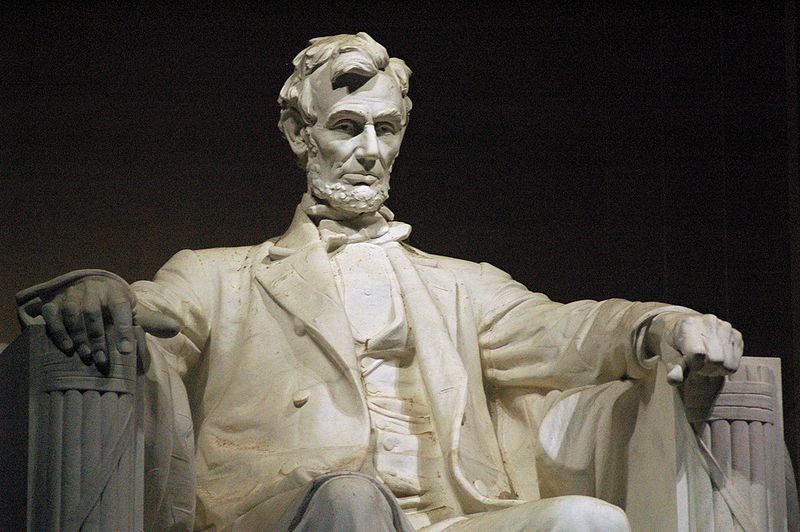
Abraham Lincoln, Lincoln Memorial, Washington, D. C. (Jeff Kubina)
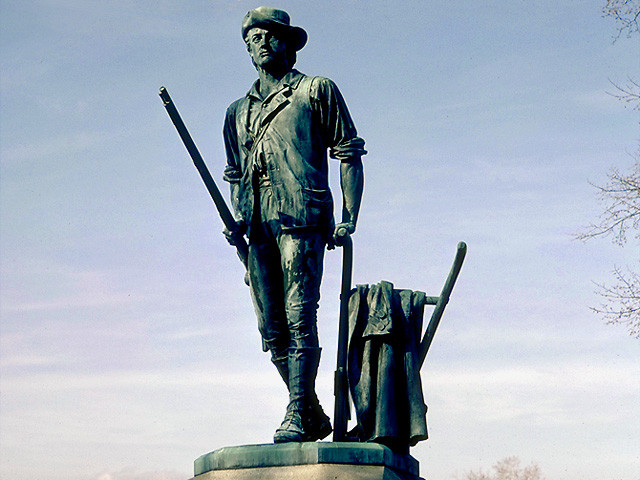
Minute Man, Minute Man National Historical Park, Concord, Massachusetts
Nobody has come up with the right obscure answer! So I’ll tell you.
The photos are of the most famous works of American sculptor Daniel Chester French. (The best example of French’s work in Minneapolis is the statue of John Pillsbury at the University of Minnesota.)
Here is the connection — and the key word is “related”:
Daniel Chester French’s older brother was William Merchant Richardson French. That’s this guy:
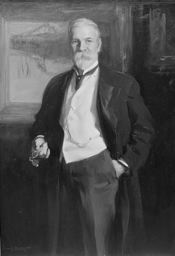
William Merchant Richardson French (Louis Betts, Art Institute of Chicago)
(Their father was Henry Flagg French who was the number two man in the U. S. Treasury Department. For eight months in 1881 he worked under Secretary of the Treasury William Windom, a U. S. Senator from Minnesota who resigned his Senate seat to become Treasury Secretary for President James Garfield. After those eight months, Windom resigned at Treasury and was elected to fill his own open seat in the Senate. He served as Secretary of the Treasury again from 1888 until his death in 1891.)
The important connection of William French to Minneapolis parks is that after graduating from Harvard in 1864 and a year at MIT studying engineering he moved to Chicago and met a man in the new and unusual profession of landscape gardening. It’s not clear how it came about, but in 1870 William French became the partner of a man thirty years older than he was. That pioneering landscape architect was Horace Cleveland.
Of course, young William, who was eager I’m sure to earn his keep with his much more experienced partner, went through his list of connections to identify potential clients. He likely recognized that one name on his list might provide useful contacts in a young city west of Chicago, Minneapolis. That contact was his cousin, George Leonard Chase, who was rector at the episcopal church in the small town of St. Anthony, which was springing up beside the falls of that name. Now it just happened that Chase had married one of the Heywood girls, Mary. And that was a funny thing because Chase’s best friend married Sarah Heywood, Mary’s sister. He and his best friend had lived together while they were students at Hobart College in New York. In fact, Chase had apparently had some influence with the regents of the University of Minnesota when they were hiring the university’s first president in 1869. Chase’s friend and brother-in-law by marriage was hired for that job. His name was William Watts Folwell.
Go Botts: Bottineau Athletic Club dominated Minneapolis park board sports for a decade
Filed under: Minneapolis parks | Tags: Bottineau Field, Marshall Terrace
Comments (2) The young men on the east side of the Mississippi River in northern Minneapolis didn’t need much incentive to become a powerhouse in Minneapolis sports. They just needed a field, and the name it gave them.
Bottineau Field in Northeast Minneapolis was purchased by the park board in 1915 to be a recreation park. Fields and a temporary shelter were laid out the next year. Although a more substantial recreation center or field house was recommended for the neighborhood, it wouldn’t get more than the wood frame warming house for 40 years. But that didn’t matter to a talented group of young athletes and their persistent manager, Charlie Cells. From the time the park was open for business in 1917 through 1926 a core group of athletes grew up together—and won a few trophies along the way. The Bottineau Athletic Club, popularly called the “Botts,” won eight park board football championships and ten more citywide titles in baseball, basketball, volleyball and diamondball. The same group of kids, then young men, played everything.
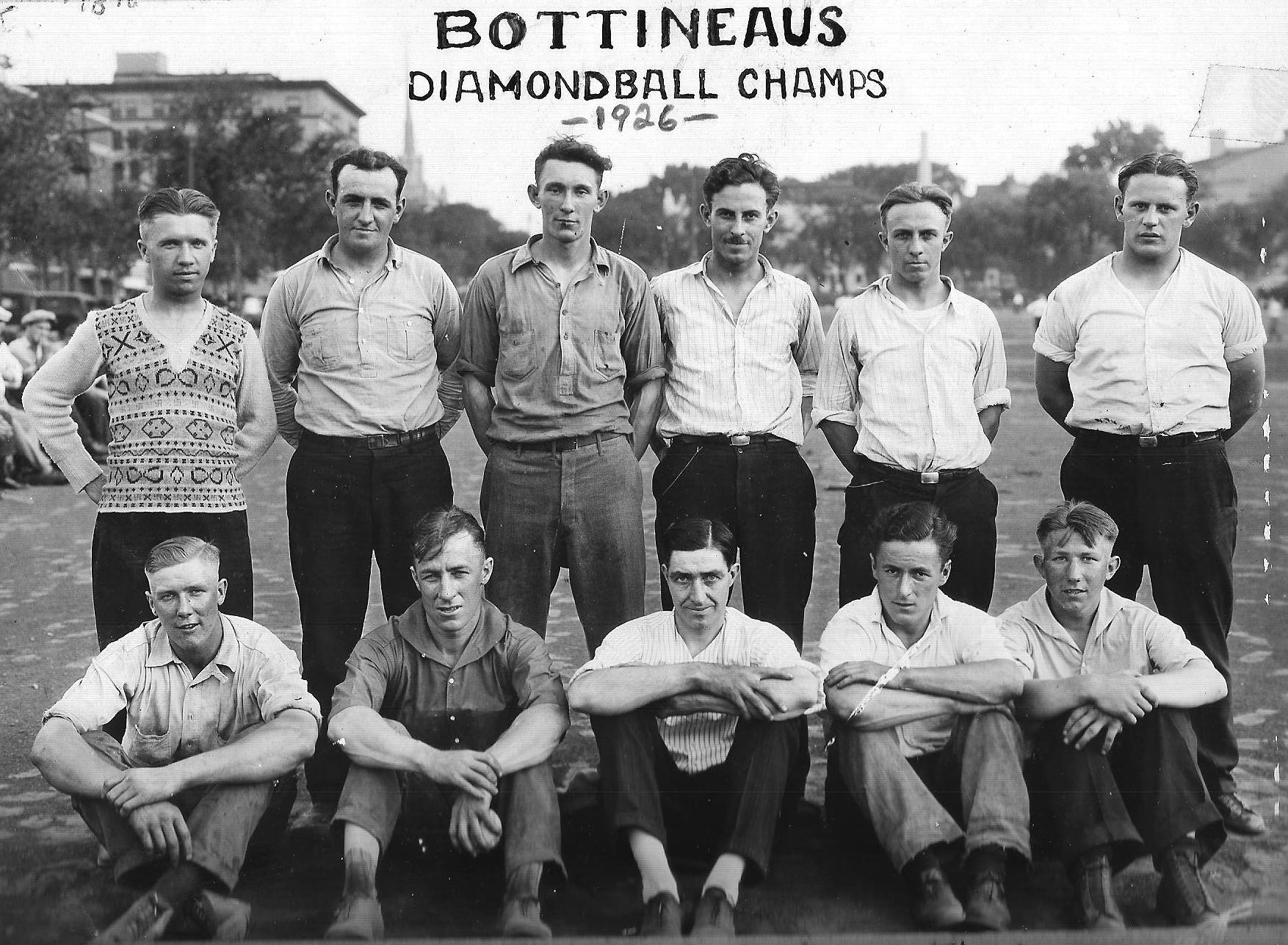
Bottineaus, Minneapolis diamondball champs, 1926, one of their last championships together. Front row (l-r): Carl Pearson, Tubby Burns, Haloran, George Besnah, Zig Bishop. Back row: Charlie Cells, Mgr., Pat Long, Boney Selinsky, Bloom Brothers, Swede Wilson. Manager Charlie Cells kept the scrapbook from which all of the “Bottineaus” pictures were copied. (Minneapolis Park and Recreation Board)
In addition to their Minneapolis championships, the Botts travelled the state to play the best basketball teams they could find and made it as far as the semi-finals of the Minnesota amateur baseball tournament in 1925.
This information is preserved in a scrapbook, “Bottineau ‘Cuts’ in Sports, Chas. A. Cells,” which comprises mostly newspaper clippings from 1925 and 1926. Most of the clippings are undated and appear to come from the Minneapolis Daily Star and Minneapolis Journal, although it is clear that some coverage of games played outside of Minneapolis, such as in Dawson and Ortonville, Minn., came from papers in those localities.
The highlight of the scrapbook and clippings is newspaper coverage of the battle for football supremacy in Minneapolis between the Botts and their nemesis from 1924-1926. Their rivals were also their neighbors, the Marshall Terrace team just up river. The Bottineaus and the Terraces, as newspapers called them, battled for the city title in all three of those years. The photo in City of Parks of a football game at Bottineau Field was of the city championship game between Bottineau and Marshall Terrace in 1926. The Minneapolis Journal estimated the crowd at 5,000.
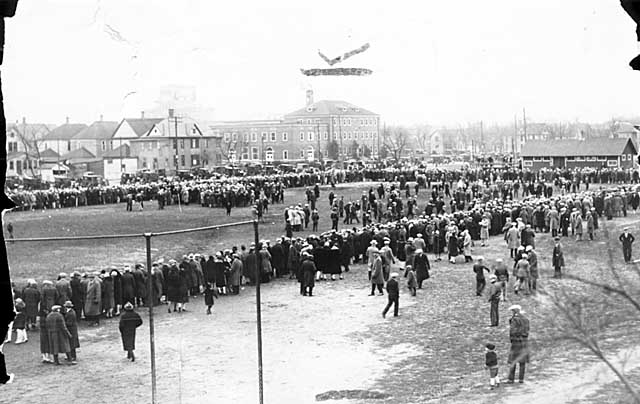
In the biggest game of the 1926 park league season perennial powerhouses Bottineau and Marshall Terrace played at Bottineau Field in front of a crowd estimated by the Minneapolis Journal at 5,000. The Botts defeated the Terraces on a 55-yard punt return by Charles Samek. (City of Parks, Minneapolis Journal, Minnesota Historical Society)
A similar crowd had witnessed the championship at The Parade a year earlier when special bleachers had to be erected for the big crowd.
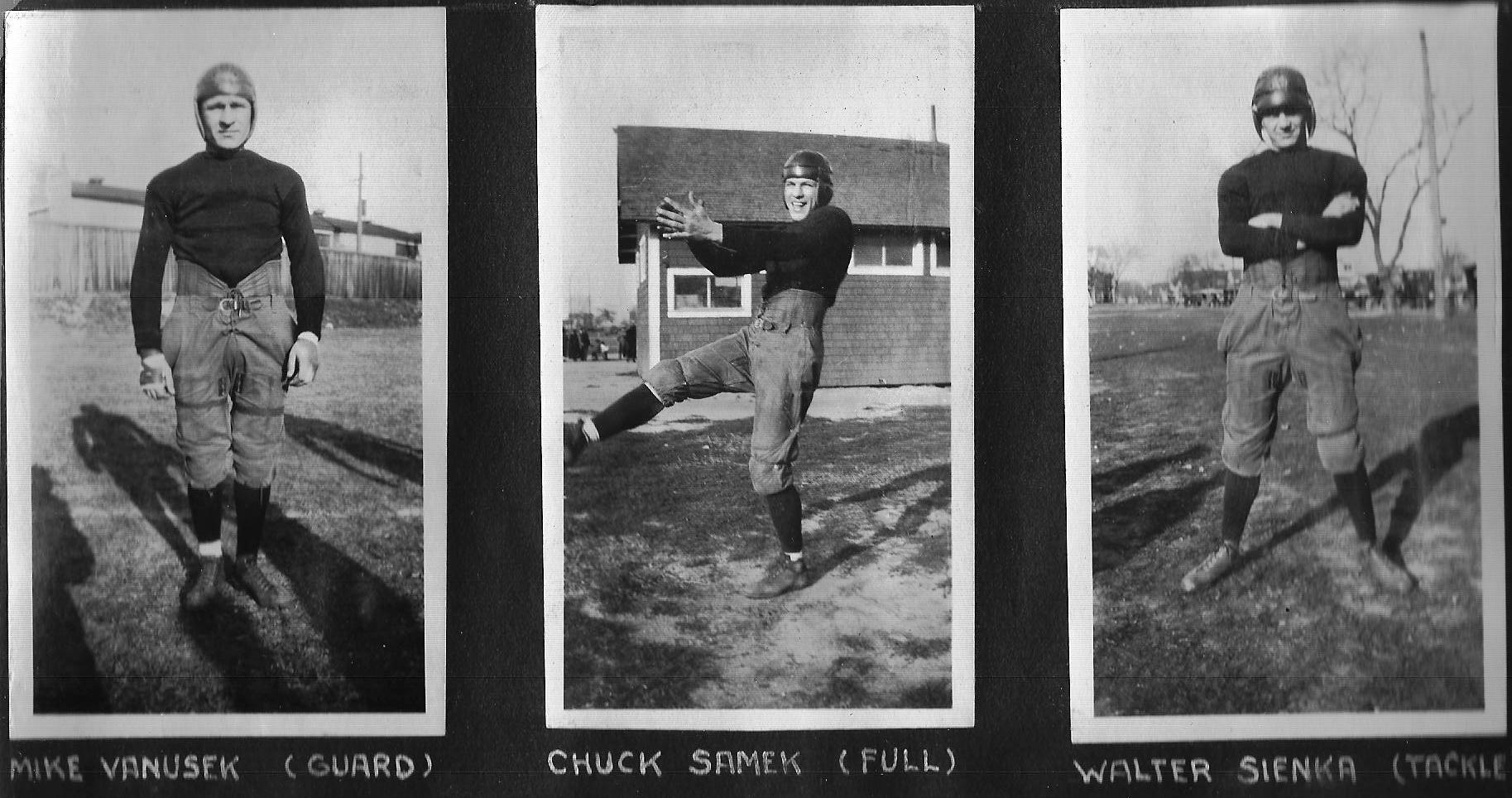
Bottineau football players, 1925. Mike Vanusek (guard), Chuck Samek (full), the hero of the 1926 game, and Walter Sienka (tackle). The building behind Samek is the Bottineau Field shelter that served the park 1916-1956. The original shelter did not have bathrooms. The park board moved two toilets from Loring Park to Bottineau in 1918. There is no record that indoor plumbing was added to this shelter before it was replaced in 1956. Does anyone remember toilets at the old Bottineau Field shelter? (Minneapolis Park and Recreation Board)
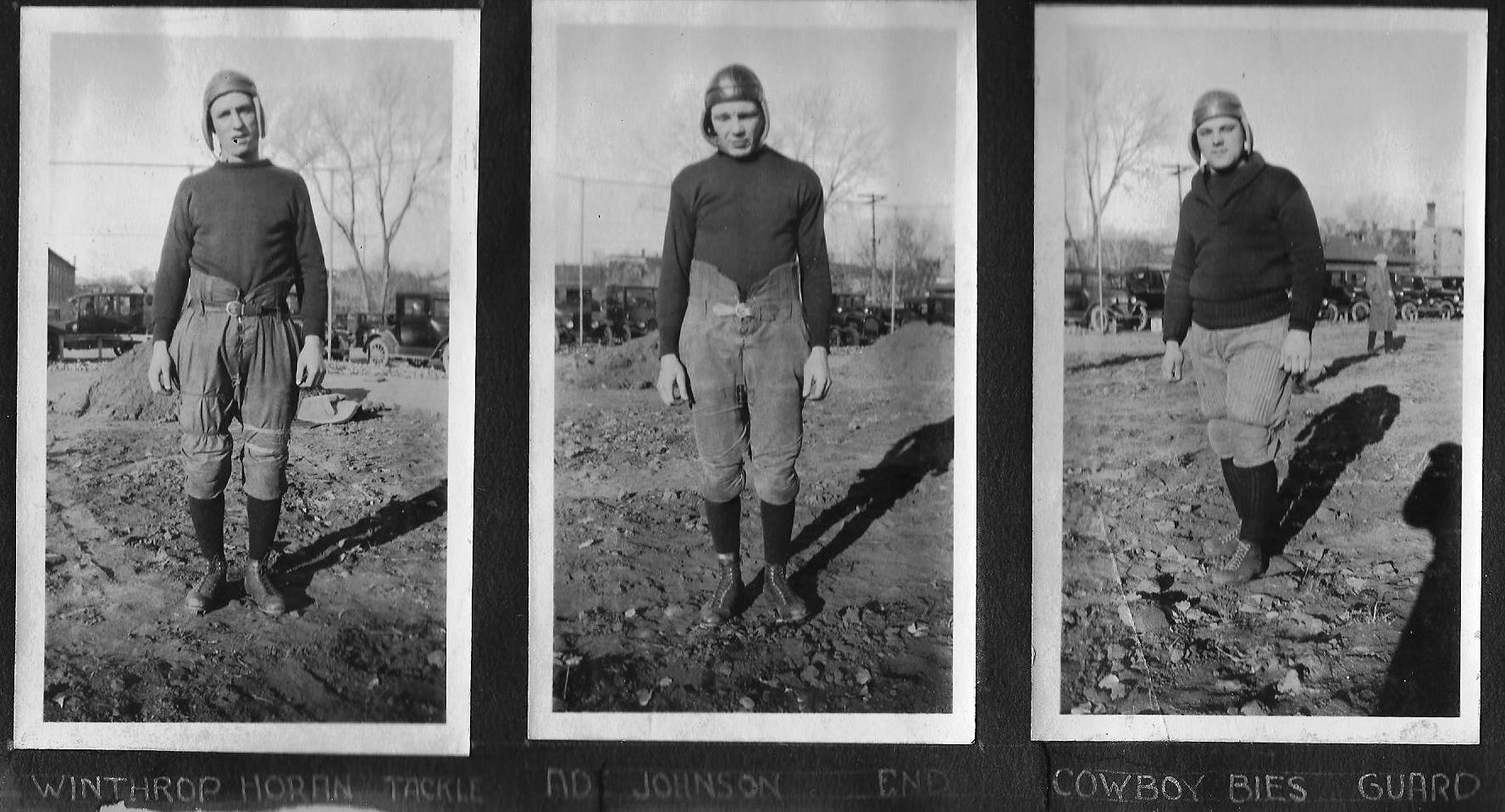
Bottineau football players, 1925. Winthrop Horan (tackle), Ade Johnson (end), Cowboy Bies (guard). I like the cars in the background. (Minneapolis Park and Recreation Board)
The Botts began in the junior division, but the players grew into the senior division winning consistently along the way. During the mid-1920s the Botts played a series of games against Gustavus Adolphus college from St. Peter. In 1924 the Botts prevailed 6-0 thanks to a blocked punt recovered for a touchdown. The scrap book contains one imposing image of a “giant” that played for Gustavus: Henry Goecken from South Dakota stood an amazing 6′ 4″ and weighed 198 pounds.
One reason for the Botts success over the years appears to be that they had at least one elite athlete: George Besnah.
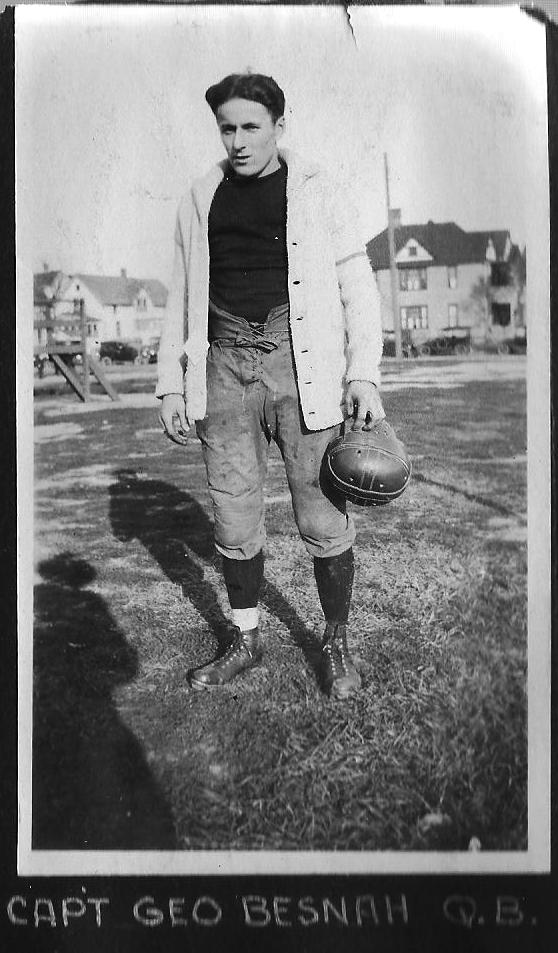
George Besnah was apparently the superstar of the Botts. He was the captain of the football team and a superb basketball player who played for a Chicago team in an early professional league. (Minneapolis Park and Recreation Board)
Newspaper clippings tell of Botts’ games in Mora, Sauk Center, Howard Lake, Dawson, Ortonville, Madison and Benson, and include requests for teams from Duluth, Redwood Falls and other towns to call Charles Cells to schedule games. One of those road games, presumably in Ortonville, prompted a reporter to write that the Botts had put on a “great exhibition of the court game.” The reporter went on to write:
But there was one player—George Besnah—who was the “cream of the lot” and his playing of the floor and his ability to dribble was well worth the price of admission. His play was a revelation, even more because he was not “out there” trying to make all the points himself, but to the contrary made fine use of his ability to pass to a teammate when such a play put his mate at better advantage.
Toward the back of Charlie Cells scrapbook, were a couple undated clips about George Besnah. The first one reported that Besnah, who had been playing for the Hopkins Independents, was in Chicago for a tryout with the Chicago Bruins in the American Professional League. The report continued that Besnah would be replaced on the Hopkins team by Joe Hutton and Fat Nordly, former Carleton College stars. (If you know Minnesota basketball, you know where this is going.)
Another clip delivered the news that Besnah had signed a contract to play with the Chicago Maroons of the National professional league. He was reported to have signed for $50 a game, a handsome sum, and would get into a Maroon uniform immediately. (There were two teams named the Chicago Maroons that I can find: one, was the University of Chicago, of Jay Berwanger and Amos Alonzo Stagg fame in football and the university team didn’t likely pay players (at least not that much!) ; and two, a team named the Chicago Maroons did play professionally, but it was a team of black players from Chicago. So I’m not sure exactly who Besnah signed with.)
Back to Besnah’s replacements on the Hopkins Independents. Joe Hutton went on to become the most successful basketball coach in Minnesota history in 35 years coaching at Hamline University. He won three national championships in the smaller college division, but Hamline played a high-level national schedule including games against NCAA champion City College of New York in Madison Square Garden and George Mikan’s DePaul team at Chicago Stadium. At one time seven of Hutton’s Hamline players were in the NBA, including Vern Mikkelsen, an NBA Hall of Fame player. Hutton was offered the job of coaching the Minneapolis Lakers, but chose to remain at Hamline.
(As a sophomore at Hamline I was looking for part-time work and was sent by the financial aid office to a house across Snelling Avenue from the university that needed painting. I was surprised to find that it was the home of Joe Hutton, who had retired as Hamline’s coach six years earlier. He wanted to hire a student to do his painting. While I painted, he told me basketball stories. He had recognized me from my freshman season playing basketball for Hamline; he still attended all the home games. I wish I had written down those stories.)
The other former Carleton star who was reported to replace Besnah on the Hopkins team was Carl Nordly who later became a professor and basketball coach at the University of Minnesota.
When the Botts finally decided to disband after the 1926 football season, Cells put a clip in the scrapbook that must have given him great pleasure. “Charles Cells, manager of the Bottineau Athletic Club,” the newspaper reported, “has been with the aggregation for many years and much of the credit for the splendid record of this group can be laid to Mr. Cells active interest and unselfish effort in bringing the organization to the highest point of perfection.”
Cells’ management of the club must have included fundraising, because in a clip about an appreciation dinner after one championship season, Cells thanked the businessmen of the East side for their support. Among the businesses he acknowledged were R. F. Bertch Furniture, Kozlak Bros. furniture dealers, Northeast Bakery, Bottineau Billiard Parlor, Hygienic Artificial Ice Co., Joe Schmidt Meat Co., Super Bros. drugs, Mergen’s Department store, East Side Bakery and Webster McDonald of McDonald Bros. (Another clip mentioned that one of the Botts trophies was on display at Mergen’s.)
Cells’ contribution to the Botts has now extended well beyond managing their varied teams: he left behind a scrapbook which gives us a glimpse of the exceptional group of athletes that grew up together on the east side of the river and dominated Minneapolis amateur sports for a decade.
David C. Smith
© David C. Smith
The “Brownie” in Brownie Lake
Filed under: Minneapolis parks | Tags: Agnes "Brownie" McNair Hull, Brownie Lake, Cedar Lake Parkway, Charles M. Loring, Minneapolis parks, William McNair, Wilson Park
Comments (2) In the historical profile I wrote about Brownie Lake for the Minneapolis Park and Recreation Board, I reported that I had found a handwritten note on an old park board document that attributed the lake’s name to the nickname of William McNair’s daughter. Now, I’ve also found a newspaper reference to that.
The Minneapolis Tribune of November 13, 1910 reported on the origin of the names of Minneapolis lakes. The article said Brownie Lake was taken from the nickname of Mrs. Louis K. Hull. Louis Hull, a prominent young attorney in Minneapolis, married Agnes McNair, one of two daughters of William McNair, on December 12, 1892.
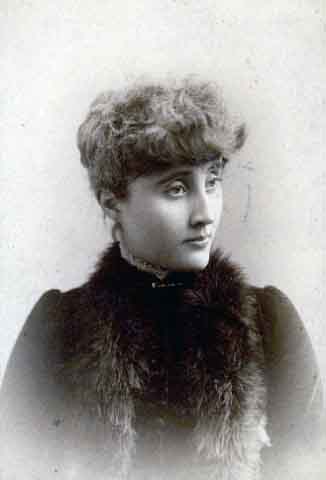
Agnes “Brownie” McNair Hull, namesake of Brownie Lake, about 1890 (Jordan, Minnesota Historical Society)
William McNair was an influential attorney and businessman in Minneapolis who had died in 1885. Among his many real estate holdings in the city was a 1,000-acre farm that stretched across much of near north Minneapolis to include Brownie Lake. At the time of his death he was said to be in negotiation with the park board to donate a 100-foot-wide strip of land for a parkway that would have extended from Lake of the Isles, around Cedar Lake, to Farview Park in north Minneapolis. It was said he already owned nearly all the land that would be required for that four-mile parkway. His obituary (September 16, 1885, Minneapolis Tribune) claimed that he was building a mansion at 13th and Linden (facing Hawthorne Park) that would rival W. D. Washburn’s “Fair Oaks” in south Minneapolis. Louise McNair, his widow, apparently finished it, judging by this photo. Whatever happened to it? Did it outlive Fair Oaks?

McNair home, about 1890, Hawthorne Park, Minneapolis. “Brownie” McNair was married here. (Minnesota Historical Society)
A curiosity about Brownie Lake: about half of the lake was platted into streets and “blocks.” The map of Cedar Lake and environs in the 1909 annual report of the park board shows Drew, Chowen and Beard avenues platted through Brownie Lake. Much of the land for Cedar Lake Parkway, and park board control of Cedar Lake, came from donations by McNair’s widow, Louise. She was the sister of McNair’s first law partner, Eugene Wilson, who was an important park commissioner and the attorney for the first park board. Hawthorne Park, where the McNair’s were building their mansion, was later renamed Wilson Park after Eugene Wilson. Wilson Park was condemned in the 1960s to become part of the I-94 interchange.

Wilson Park, once known as Hawthorne Park, in about 1942, looking southwest with Basilica in background (Jack Delano, Minnesota Historical Society)
The park and playground west of Cedar Lake, which has always been known as Reserve Block 40, but never formally named, is in a neighborhood known as McNair Park. As residents of the Bryn Mawr neighborhood consider renaming Reserve Block 40, they could do worse than to keep the McNair Park name.
A final bit of Brownie Lake-related trivia: One of the pall bearers at William McNair’s funeral was Charles M. Loring. What makes that noteworthy in these days of political and philosophical rancor is that Loring and McNair were local leaders among Republicans and Democrats respectively. Clearly they were able to see past their political differences.
David C. Smith
© David C. Smith
The Good Old Days
The men and women of today who recall with lively joy the days when they played unwatched through the long summer days in meadow or woods or the old swimmin’ hole are likely to pity the youngsters of the present whose recreation is supervised and scheduled by grownups. For young dreamers with vigorous personalities there was something not to be duplicated in the lazy happiness of those days. But “other times, other customs.” City life of today is immeasurably more complicated: it has manifold possibilities for evil, numerous forces which make the child sophisticated before his time and which make a carefully planned constructive work necessary.
Overheard that discussion lately? Had it yourself?
The quote was taken verbatim from an article about park playgrounds in the Minneapolis Tribune, June 20 — 1920.
Do you have a story about playgrounds in the summer when you were a kid? Send it to me.
David C. Smith
Frederick Law Olmsted and Minneapolis Parks
Filed under: Landscape Architects, Minneapolis parks | Tags: Frederick Law Olmsted, H.W.S. Cleveland, Horace Cleveland, Minneapolis parks, Washburn Fair Oaks, William D. Washburn
Comments (3) How many Minneapolis parks did Frederick Law Olmsted design? How about his sons, Junior and JC? I believe the grand total is zero.
Some people have a mistaken notion that Olmsted, the godfather of American parks, played a role in the creation of Minneapolis parks. The impression was created in part by a letter Olmsted wrote to the Minneapolis park board in 1886 and by claims that Olmsted designed the grounds around William Washburn’s mansion Fair Oaks, which later became Washburn Fair Oaks Park.
A city claiming that Olmsted designed a park is akin to an inn in the East declaring “George Washington slept here.” A quick way to impress. The difference is that exhaustive records and correspondence document what Olmsted actually did, while there is little proof of where George laid his wooden teeth on any given night.

 Minneapolis Park History